Skip to content
JERSEY LIPERSONAL REAL ESTATE CORPORATION
Capitol Hill / North Burnaby

Capitol Hill, where the views earn every stair.

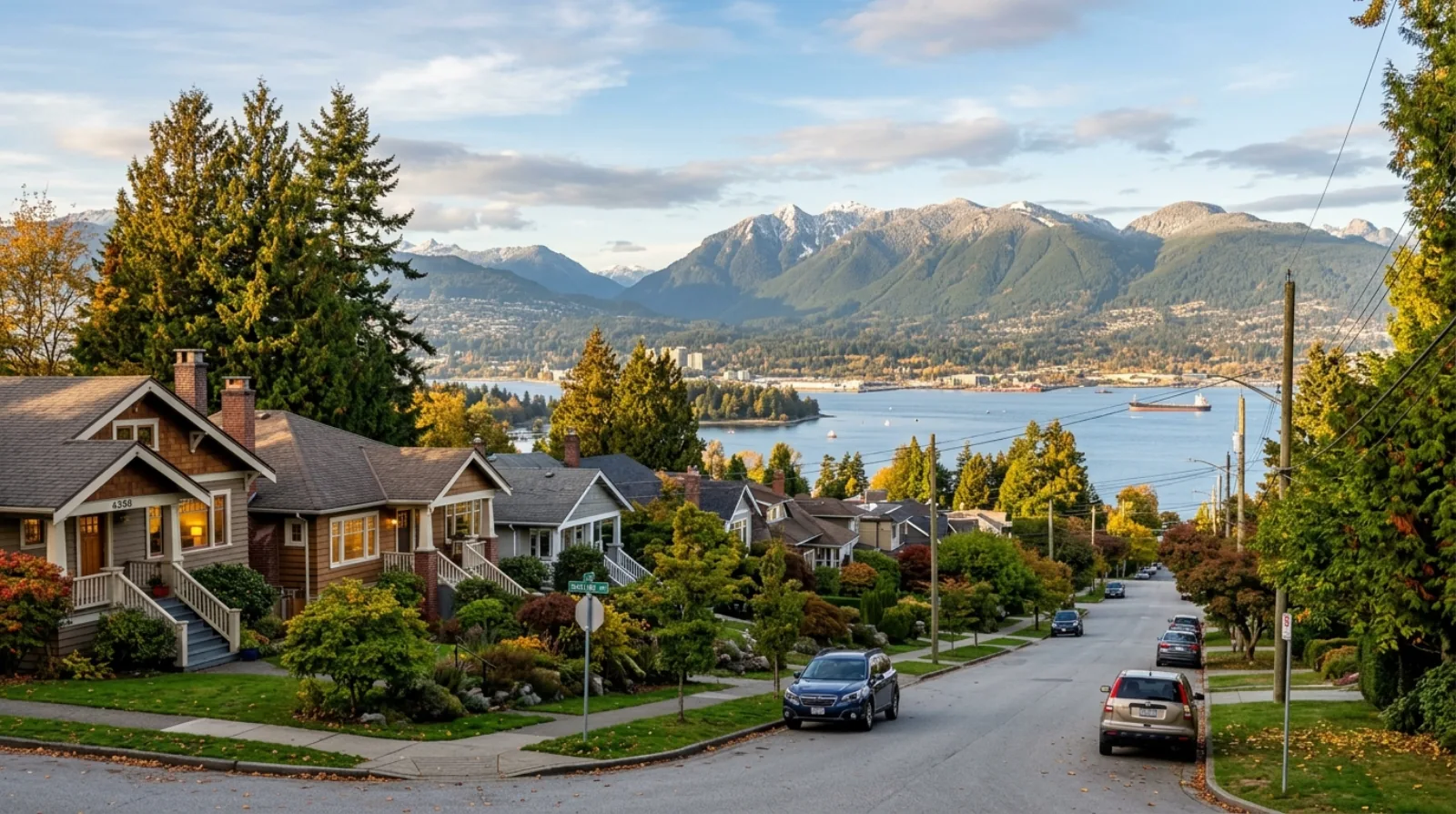
Capitol Hill is the highest residential neighbourhood in Burnaby, sitting at 203 metres above sea level on the west slope of Burnaby Mountain. From the north side of the hill, on a clear day, you can see Burrard Inlet, the Lions Gate Bridge, the Second Narrows Bridge, the North Shore mountains, and the skyline of downtown Vancouver all at once. That view is not the only reason people move here, but it is never far from the conversation. The neighbourhood is made up mostly of single-family homes built between the 1930s and 1960s — Craftsman bungalows, stucco cottages, and solid post-war houses on large lots along quiet, tree-lined streets. Capitol Hill has long been home to Italian, Portuguese, and Croatian communities, and that character still shows in the streetscape and the local restaurants along Hastings Street below. The area borders Burnaby Heights to the west and sits close enough to Hastings Street to walk to a real, independent main street — something most Burnaby neighbourhoods do not have. Capitol Hill is not a neighbourhood for people who want brand-new glass towers and SkyTrain at their door. It is a neighbourhood for people who want space, permanence, views, and a place that already has a story.

Jersey LiSutton Group — 1st West RealtyMedallion ClubUpdated
Capitol Hill, Burnaby
Walk Score76
Transit Score52
HousingSingle-family detached homes, 1930s–1960s character stock
MultiplexR1 SSMUH — up to 4–6 units on most lots under Bill 44 / Burnaby Bylaw 14783
Quick Answer

Capitol Hill is an established hillside neighbourhood in North Burnaby at 203 metres elevation. It is known for character single-family homes from the 1930s to 1960s, sweeping views of Burrard Inlet and the North Shore mountains, and proximity to the Hastings Street corridor of Burnaby Heights. Transit is served by the R5 Hastings RapidBus. The nearest SkyTrain stations are Brentwood Town Centre and Holdom, both reachable by bus.

Key Takeaways
  • 01Capitol Hill sits at 203 metres elevation in North Burnaby, offering some of the widest views in the city — Burrard Inlet, Lions Gate Bridge, Second Narrows Bridge, North Shore mountains, and downtown Vancouver on clear days.
  • 02Housing is dominated by single-family detached homes built between the 1930s and 1960s, with large lots and the typical character features of that era: Craftsman bungalows, stucco cottages, and post-war ranchers.
  • 03The R5 Hastings Street RapidBus runs along the southern edge of the neighbourhood, linking residents to Burrard Station in downtown Vancouver and to SFU without a SkyTrain transfer.
  • 04Capitol Hill is directly adjacent to Burnaby Heights, one of North Burnaby's most active independent main streets, with cafés, restaurants, bakeries, and boutiques along Hastings Street.
  • 05Confederation Park — the neighbourhood's principal green space — sits at the base of the hill and includes tennis courts, soccer fields, a model steam railway, a skateboard park, and the Eileen Dailly Leisure Pool.
  • 06Under BC Bill 44 and Burnaby's R1 SSMUH bylaw, most Capitol Hill lots can accommodate three to six units, making the large lots here among the most versatile in North Burnaby for future redevelopment.
Your Capitol Hill Agent

Your Capitol Hill real estate agent — Jersey Li.

Capitol Hill has a very specific kind of real estate market: older homes on large lots, with value that varies sharply by elevation, orientation, and view corridor. A house fifty metres higher on the hill can be a fundamentally different asset from one at the base. I help buyers understand that gradient — where the views actually open up, which streets retain morning sun, and which lots have the slope geometry that makes future redevelopment straightforward versus complicated.

Older homes require a different level of due diligence than new construction. I walk buyers through what to look for in houses from this era: the condition of foundations common to 1940s and 1950s Burnaby construction, knob-and-tube electrical updates, oil-tank history, and the particular drainage considerations on sloped lots. Capitol Hill homes can be excellent long-term assets or expensive surprises — the difference is how carefully you look before you commit.

Bill 44 and Burnaby's R1 SSMUH bylaw have made the large lots in Capitol Hill genuinely interesting for buyers who want to think beyond the house that is there today. Many lots in this area are large enough to support four to six units under the new rules, and the frequent-transit overlay from the R5 Hastings RapidBus applies to much of the neighbourhood. I run through that math honestly with every buyer who asks — including the cases where the numbers do not yet support redevelopment and where patient holding makes more sense than an immediate build.

  • Hands-on familiarity with Capitol Hill's elevation gradient and which streets deliver the clearest views of Burrard Inlet and the North Shore
  • Experienced in older-home due diligence: foundations, oil-tank decommissioning, electrical updates, and sloped-lot drainage in North Burnaby's 1930s–1960s character stock
  • Bill 44 / R1 SSMUH multiplex feasibility analysis for Capitol Hill's large lots, including frequent-transit overlay mapping along the R5 Hastings corridor
  • Medallion Club agent (top 10% REBGV) — Sutton Group — 1st West Realty
Jersey LiSutton Group — 1st West RealtyMedallion ClubLicensed (RECBC)
Work with Jersey in Capitol Hill
On This Page
(01)

The Capitol Hill Character

Capitol Hill is one of Burnaby's oldest residential neighbourhoods and one of its highest points. The hill was first logged in 1902 by settler L.I. Dundas, and Dundas Street — which runs east-west across the neighbourhood today — carries his name. By 1908, real estate activity had begun on the slopes, and by 1909 the name "Capitol Hill" was already being used by brokers to describe this part of Burnaby. The original buyer proposition has not changed much since: a hilltop address, large lots, views, and quiet streets.

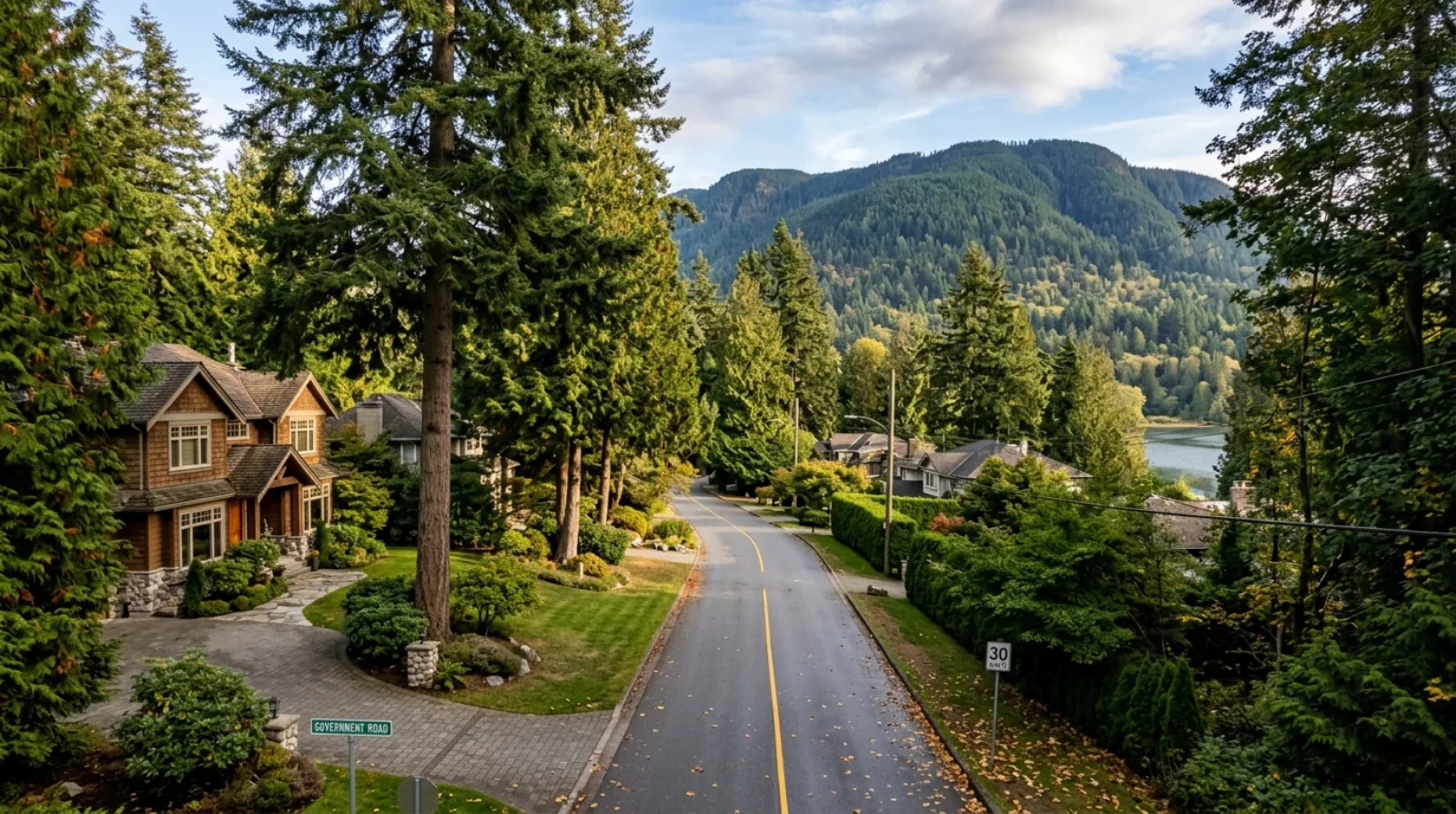
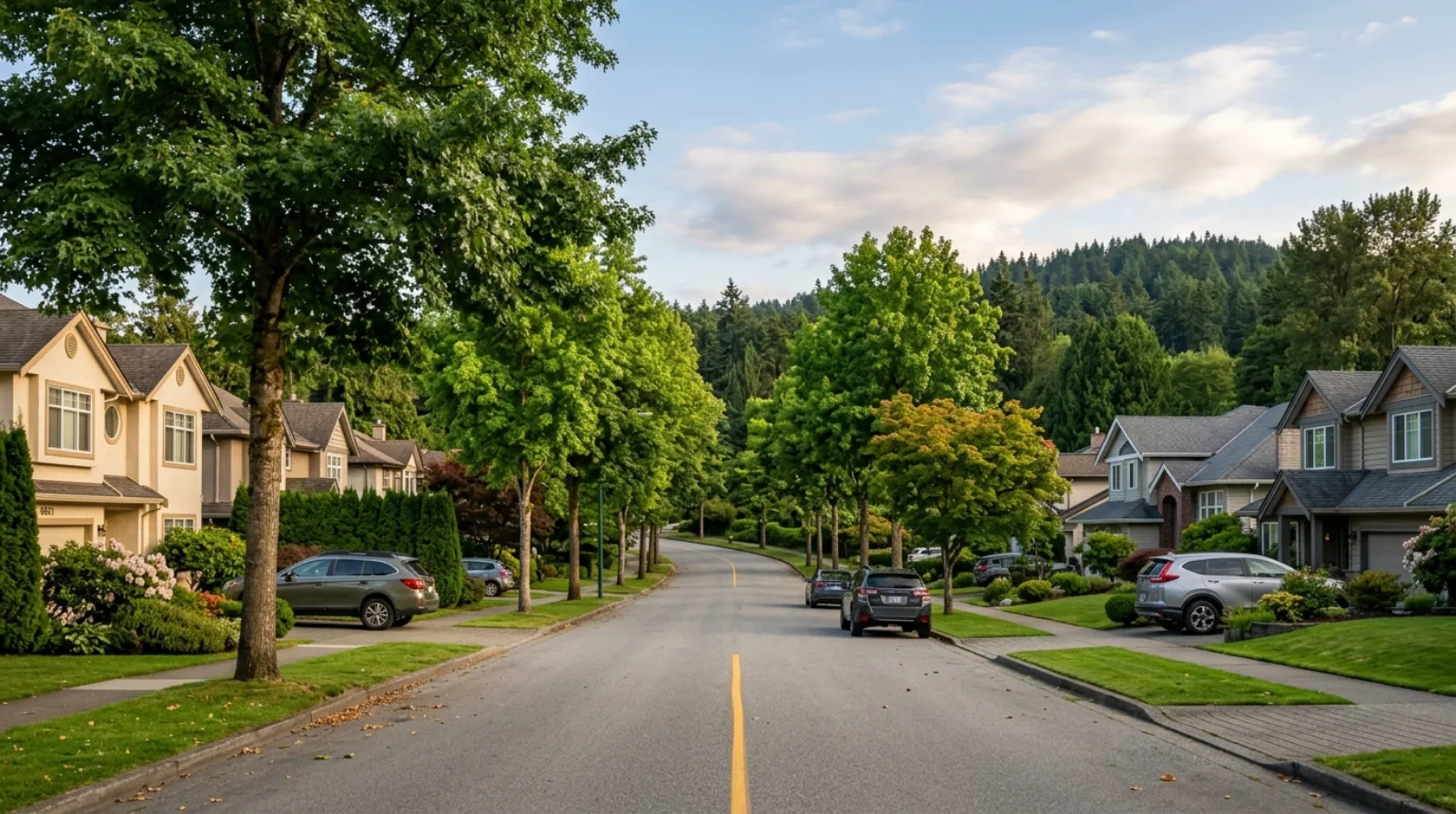
The housing stock reflects that early history. Most of the homes in Capitol Hill were built between the 1930s and 1960s, and the neighbourhood retains the character of that period — Craftsman bungalows with deep front porches, stucco cottages, and post-war two-storey houses on 50-to-66-foot lots. There is relatively little new construction in the core of the hill. The homes are solid and well-rooted, and the streetscape has the density and tree canopy of a fully mature neighbourhood. This is not a place that looks like it is waiting for something to happen.

Capitol Hill has long been home to Italian, Portuguese, and Croatian communities, whose presence shaped the social character of the neighbourhood and the restaurants along Hastings Street below. The proximity to Simon Fraser University also brings a student and academic presence, particularly in the apartment buildings along Hastings and Holdom. The result is a neighbourhood that is ethnically and generationally mixed in a way that feels organic rather than managed.

The north-facing viewline from the upper streets is the neighbourhood's defining feature. From Hythe Avenue, Cambridge Street, and the Capitol Hill Conservation Area, the view takes in East Vancouver, downtown Vancouver, Burrard Inlet, Lions Gate Bridge, Second Narrows Bridge, Bowen Island, the North Shore mountains, and on clear days, Vancouver Island to the west and Mount Baker to the south. Very few neighbourhoods in Metro Vancouver offer this breadth at a residential elevation without a mountain gondola.
(02)

The Real Estate Market

Capitol Hill is a single-family market with almost no new construction supply. The homes that trade here are mostly the original 1930s-to-1960s stock, supplemented by a smaller number of renovated homes, mid-century rebuilds, and a few newer infill houses on subdivided lots. The apartment and condo inventory is concentrated along Hastings Street and Holdom Avenue at the base of the hill — these trade at a different price point from the detached homes higher up.

Value in Capitol Hill is driven by elevation and view more directly than in almost any other Burnaby neighbourhood. A detached home at the base of the hill, with no view, is priced on its lot size, condition, and redevelopment potential. A home higher on the hill, with a clear northern view corridor across Burrard Inlet, commands a meaningful premium over that — and the premium is consistent across market cycles because the supply of view lots is physically finite. This is a neighbourhood where buying higher up the hill has reliably been the better long-term decision.

Days on market for well-priced detached homes in Capitol Hill tend to be moderate — this is a low-turnover neighbourhood, and the buyer pool is specific. People looking for this kind of home are searching with intention: they want the views, the lot size, the established character, and the proximity to Burnaby Heights. When a home checks those boxes and is priced correctly, it moves. When it is priced based on a neighbour's aspirational number without accounting for condition or orientation, it sits.

The condominium market along Hastings Street serves a completely different buyer profile: students, young professionals, and downsizers who want walkable access to the Hastings retail corridor and the R5 bus without the maintenance demands of a detached house on a sloped lot. These two markets — hilltop detached and Hastings-adjacent condo — trade differently and should be analysed separately, not averaged together.

(03)

Living in Capitol Hill

Day-to-day life in Capitol Hill centres on the Hastings Street corridor below the hill and the neighbourhood's own quiet residential streets above it. The walk from the upper reaches of Capitol Hill down to Burnaby Heights takes about fifteen to twenty minutes on foot, dropping through a network of tree-lined streets with mature gardens and the occasional set of hillside stairs. Most residents make that walk regularly for coffee, groceries, and dinner.

Burnaby Heights, the adjacent neighbourhood along Hastings between Boundary Road and Willingdon, is the neighbourhood's practical main street. Safeway at 4440 Hastings anchors the grocery options; independent restaurants along the strip include Italian trattorias, Vietnamese noodle houses, and Australian pie shops. Gabi and Jules and Caffé Divano handle coffee. The Heights has the feel of a neighbourhood that has been quietly excellent for decades without needing to announce itself.

Capitol Hill Conservation Area provides the neighbourhood's primary trail network. The Capitol Hill Scenic Trail runs approximately 2.7 miles with about 90 metres of elevation gain, looping through second-growth forest with open viewpoints across Burrard Inlet. The trail connects at its lower end to Confederation Park, which adds tennis courts, soccer fields, a skateboard park, a lawn bowling green, and the model steam railway that runs on summer weekends. Eileen Dailly Leisure Pool and the McGill branch of Burnaby Public Library are both accessible from the park.

The honest tradeoff in Capitol Hill is transit. The R5 Hastings RapidBus provides a real connection to downtown Vancouver and to SFU, but the nearest SkyTrain stations — Brentwood Town Centre and Holdom on the Millennium Line — require a bus connection. For residents without a car, the commute to downtown is longer than from Brentwood or Metrotown. This is a neighbourhood where most households own at least one vehicle, and where transit access is improving but remains secondary to the car.

(04)

Multiplex and Redevelopment Outlook

Capitol Hill's redevelopment story changed fundamentally in June 2024 when Burnaby adopted the R1 SSMUH (Small-Scale Multi-Unit Housing) zoning district in response to BC Bill 44. Under these rules, most lots that were previously zoned for single-family use can now accommodate three to four units by right, with the number rising to six units on lots within 400 metres of a Frequent Transit Network stop. Much of Capitol Hill falls within the R5 Hastings Street RapidBus catchment, which qualifies as a Frequent Transit Network route — meaning many lots here are eligible for six units.

The practical opportunity on Capitol Hill's large lots is real but not immediate. The hill's topography, combined with the 2025 amendments to Burnaby's R1 rules — which reduced permitted height from four storeys to three, added rear-building restrictions, and raised parking minimums — means that not every large lot is straightforwardly economical to redevelop today. The math depends on specific lot size, slope, current structure condition, and construction costs. Some lots make clear sense for a three-to-four-unit infill build. Others are better held as single-family homes until construction costs shift.

For buyers who want to acquire a large Capitol Hill lot as a long-term hold with redevelopment optionality, the combination of view premium, large lot sizes, and the R1 SSMUH overlay creates a case that does not exist in the same form in most other Burnaby neighbourhoods. The view corridor itself is an asset that carries into a multi-unit building, not just a single house, which can support higher end-unit values on a future small-scale project.

What Capitol Hill is not is an assembly play. The neighbourhood lacks the large-lot adjacency and zoning scale that drives the high-rise assembly activity in the Brentwood or Metrotown corridors. The redevelopment story here is small-scale infill: a home on a 7,000-square-foot lot becomes a fourplex, or a worn post-war house on a slope is replaced by a three-unit building where each unit has a view. That is a different market from Burnaby's tower zones, and it serves a different type of buyer.

(05)

Community and Amenities

Confederation Park is the neighbourhood's primary green space and one of the larger parks in North Burnaby. The park sits at the base of the hill along Penzance Drive and North Willingdon Avenue and includes tennis courts, soccer fields, a lacrosse box, a skateboard park, a lawn bowling green, a playground and spray park, and the Burnaby Central Railway — a model steam railway that runs every summer weekend. The park is genuinely family-oriented and fills on warm weekends in a way that reflects the neighbourhood's mix of long-term families and newer residents.

Eileen Dailly Leisure Pool and Fitness Centre is accessible from the park and offers public swimming, fitness facilities, and programming. The Confederation Community Centre provides additional indoor recreation options, and the McGill branch of Burnaby Public Library is within walking distance. These are practical, well-used civic amenities rather than the branded lifestyle facilities that newer tower developments tend to feature.

Schools are a strong point. Capitol Hill Elementary at 350 Holdom Avenue serves the area with a French Immersion stream and has a long history in the neighbourhood — a school photograph from 1926 shows the building already established. Burnaby North Secondary serves the area for grades 8 through 12 and has a broad academic and extracurricular programme. Alpha Secondary is also nearby and draws from parts of the catchment.

The community character in Capitol Hill is defined more by long-time residents than by institutions. It is a neighbourhood where families stay for decades, where neighbours know each other, and where the block association conversations are about drainage and tree pruning rather than developer applications. That stability is visible in the streetscape — well-maintained gardens, careful fencing, the particular quality of a neighbourhood that is not performing its desirability but simply living it.

(06)

Capitol Hill vs Burnaby Heights vs Westridge

All three of these North Burnaby neighbourhoods share the Hastings Street corridor as their southern anchor, and all three attract buyers who want established character, large lots, and proximity to an independent main street. The differences between them are real and matter depending on what you are optimising for.

Burnaby Heights sits directly west of Capitol Hill, straddling Hastings Street between Boundary Road and Willingdon. It has more commercial activity within walking distance — the Heights main street is denser and more varied than what Capitol Hill offers from its upper slopes — and housing prices are broadly similar. Burnaby Heights tends to have more flat-lot geometry, which is easier to build on under SSMUH rules but lacks the dramatic view premium that Capitol Hill offers from its upper streets.

Westridge sits to the east of Capitol Hill, on the western slopes of Burnaby Mountain closer to the Burnaby Mountain Conservation Area. It is quieter and more secluded, with fewer through-roads and a stronger emphasis on nature access. Prices at the top end of Westridge can exceed Capitol Hill's upper tier, driven by larger lots and exceptional views. The tradeoff is that Westridge is further from the Hastings Street amenity corridor and has fewer transit options.

For a buyer who wants a view hillside neighbourhood within walking distance of an active independent main street, Capitol Hill is the natural choice among these three. For a buyer who wants maximum nature immersion and is less concerned about transit or main-street walkability, Westridge competes seriously. For a buyer who prioritises flat lots, easy walkability to shops, and a slightly more urban feel, the north side of Burnaby Heights may serve better than Capitol Hill's steeper upper streets.

(07)

What to Watch For When Buying in Capitol Hill

Older homes in Capitol Hill require specific due diligence. Homes built before 1960 may have original knob-and-tube wiring, which is not necessarily a deal-breaker but typically requires updating before insurers will write a policy on it. Underground oil tanks were common in North Burnaby homes through the mid-twentieth century; a decommissioning report or evidence of prior removal should be part of your pre-offer investigation. Concrete block foundations common to 1940s Burnaby construction can be solid, or they can have moisture infiltration on sloped lots — a structural inspector who knows this era specifically is worth the fee.

Sloped-lot drainage deserves attention that flat-lot buyers do not always think about. In Capitol Hill, where lots drop meaningfully from front to back or side to side, surface water management and retaining wall condition matter. Ask specifically about any drainage works done in the last ten years, check whether the current retaining structures have permits, and walk the lot after rain if you can. A problem here is not always visible in a dry-season inspection.

View corridts in Capitol Hill are not uniformly protected. Unlike some municipalities, there is no blanket view-protection policy that guarantees today's north-facing view will still exist in fifteen years. If the view is a primary reason for your purchase price, look at the property directly in your sightline and assess its redevelopment profile under current zoning. A single-storey structure on a large lot in the view corridor may one day support a taller building. A protected park or ravine will not.

Get clear on which school catchment you are in before you commit. Capitol Hill Elementary serves the eastern portion of the neighbourhood; parts of the western side may fall under a different elementary catchment. Burnaby School District's school locator tool takes an address and returns the exact school assignment — use it with the specific property address rather than assuming from the neighbourhood name.

(08)

My Take as Your Advisor

Capitol Hill works exceptionally well for a specific kind of buyer, and it does not work well for everyone. The buyers I tend to place here successfully are families or couples who want a large lot, value outdoor space, and have at least one car in the household. They prioritise quiet streets and community stability over transit convenience, and they find the view — the actual daily experience of looking across the Inlet from a garden or a kitchen window — genuinely meaningful rather than just a selling point.

The buyers I tend to redirect from Capitol Hill are people who need a reliable car-free commute, people whose finances are tight enough that deferred maintenance on an older home creates real risk, and people who want a brand-new building with no history. Those profiles are not wrong — they just fit Brentwood, or Burnaby Heights south of Hastings, or a newer North Burnaby condo, more naturally than they fit a 1950s rancher on a hill.

On the multiplex opportunity: Capitol Hill is interesting for patient buyers who see the large lots here as long-term assets and understand the R1 SSMUH overlay. I run the numbers on every lot where redevelopment potential is part of the case — not as a selling point to close the deal faster, but to make sure the buyer has an honest picture of feasibility under today's rules, today's construction costs, and today's end-user market. Sometimes the math is clear. Sometimes the honest answer is to buy the house for what it is, live in it well, and let the future take care of itself.

Capitol Hill is a neighbourhood that rewards patience and specificity. The buyers who thrive here are not people who settled for it because something else fell through. They are people who looked at the view, walked the streets, understood the age of the homes, and decided this was exactly what they wanted. When that alignment is there, Capitol Hill tends to hold its buyers for a long time — and that loyalty shows in the data on how infrequently its best lots change hands.

Getting Around

Commute times from Capitol Hill.

SkyTrain figures are in-vehicle times from TransLink's official station-to-station chart; add a few minutes for transfers and waiting. Bus and nearest-station legs are noted per row. Driving times are approximate and off-peak.

DestinationBy TransitBy Car
Downtown Vancouver (Burrard Station)R5 is a Frequent Transit Network route with buses every 5–15 min; wait time adds to in-vehicle time.Approximately 35–45 min — R5 Hastings RapidBus westbound from Hastings and Holdom directly to Burrard Station; no SkyTrain transfer required.Approximately 20–30 min off-peak via Hastings Street or Highway 1
SFU (Burnaby Mountain)One of Capitol Hill's clearest transit advantages: SFU is reachable with no transfer on the R5.Approximately 25–35 min — R5 Hastings RapidBus eastbound directly to SFU; the route terminates at the university.Approximately 15–20 min off-peak
Brentwood Town Centre Station (Millennium Line)Approximately 15–20 min — bus south on Holdom or along Hastings to Brentwood Town Centre Station.Approximately 8–12 min off-peak
Metrotown (Burnaby's main commercial hub)Approximately 40–50 min — bus to Brentwood Town Centre Station, then Millennium Line to Commercial–Broadway, then Expo Line south to Metrotown.Approximately 20–30 min off-peak
Commercial–Broadway (East Vancouver)Approximately 30–40 min — R5 west to downtown or bus to Brentwood, then SkyTrain one stop.Approximately 15–20 min off-peak
YVR / Vancouver AirportApproximately 65–80 min — bus to Brentwood, Millennium Line to Commercial–Broadway, then Expo Line south to Bridgeport and Canada Line to YVR.Approximately 35–50 min off-peak
Side by Side

Capitol Hill vs Burnaby Heights vs Westridge — three established North Burnaby hillside neighbourhoods.

Capitol HillBurnaby HeightsWestridge
Primary housing typeSingle-family detached, 1930s–1960s character homes on large lotsSingle-family detached and older low-rise apartments along Hastings StSingle-family detached, many larger luxury homes on estate-size lots
ViewsSweeping north-facing views of Burrard Inlet, North Shore mountains, downtown Vancouver from upper streetsModest or no views in most of the neighbourhood; flatter terrainBurrard Inlet and North Shore mountain views, particularly from higher lots near Burnaby Mountain
Walkability to main street15–20 min walk downhill to Burnaby Heights / Hastings St; moderate walkabilityDirect — Hastings St is the neighbourhood's own main streetFurther from Hastings; more car-dependent for daily errands
TransitR5 Hastings RapidBus at the base of the hill; nearest SkyTrain by busR5 Hastings RapidBus; similar distance to SkyTrain as Capitol HillBus service along Hastings; more car-dependent than Capitol Hill
Multiplex potential (R1 SSMUH)Strong — large lots, many within R5 frequent-transit overlay (up to 6 units)Strong — large lots with flat geometry; also within R5 frequent-transit overlayPresent but more variable — some lots very large, slope can complicate builds
Community characterEstablished, multigenerational; Italian, Portuguese, Croatian heritage communities; quiet residential streetsActive main-street community; denser mix of long-term families and newer residents near commercial stripQuiet and secluded; primarily residential; strong natural-environment orientation

Walk Score data from walkscore.com for Capitol Hill addresses on Capitol Drive. Transit scores reflect R5 Hastings RapidBus frequency and bus connections to Millennium Line stations. Multiplex eligibility based on Burnaby R1 SSMUH bylaw as amended October 2025.

Multiplex Outlook

What multiplex means for this neighborhood.

Under BC Bill 44 and Burnaby's R1 SSMUH zoning bylaw (adopted June 2024, amended October 2025), most Capitol Hill lots formerly zoned for single-family use can now accommodate three to four units by right. Lots located within 400 metres of a Frequent Transit Network stop — which includes much of Capitol Hill given the R5 Hastings Street RapidBus corridor — are eligible for up to six units. Burnaby's 2025 amendments reduced permitted height from four to three storeys, added rear-building height caps, slightly reduced lot coverage, and increased parking minimums, so site-specific feasibility depends on lot size, slope, and current structure. Capitol Hill's typically large lots (many 50–66 feet wide) make it one of the better-positioned North Burnaby neighbourhoods for small-scale multi-unit infill under these rules. Buyers considering a purchase with redevelopment potential should have a SSMUH-experienced architect or developer run a site analysis before treating redevelopment as a given.

Multiplex Advisory →
The Local Map

What's around you.

Capitol Hill — approximate centre · map © OpenStreetMap contributorsView larger map ↗

Schools

  • Capitol Hill Elementary — 350 Holdom Ave; K-7 with Late French Immersion stream; the neighbourhood's primary elementary school, established in the community since at least the 1920s
  • Confederation Park Elementary — nearby alternative elementary with a long-established community catchment in North Burnaby
  • Burnaby North Secondary — the area's public secondary school for grades 8–12; broad academic, sports, and arts programming
  • Alpha Secondary — second public secondary option serving parts of North Burnaby; known for strong academic programmes
  • McGill branch, Burnaby Public Library — within walking distance of Confederation Park; a practical civic resource for families and students in the neighbourhood

Parks & Recreation

  • Confederation Park — large community park at Penzance Drive and North Willingdon; tennis courts, soccer fields, lacrosse box, skateboard park, lawn bowling green, playground, spray park, and the Burnaby Central Railway model steam train (summer weekends)
  • Capitol Hill Conservation Area — forested conservation land on the north flank of the hill; connects to the Trans Canada Trail and offers views of Burrard Inlet; popular with dog walkers and trail runners
  • Capitol Hill Scenic Trail — approximately 2.7-mile loop through second-growth forest with viewpoints across the Inlet; easy to moderate difficulty; lower trailhead accessible from Confederation Park
  • Eileen Dailly Leisure Pool and Fitness Centre — public aquatic and fitness facility at the edge of Confederation Park
  • Central Valley Greenway — regional walking and cycling corridor accessible from the south edge of the neighbourhood; runs east toward New Westminster and west toward Vancouver
  • Kensington Park — a short drive east along Hastings; sports facilities, pitch-and-putt golf, and additional green space

Transit

  • R5 Hastings Street RapidBus — runs along Hastings Street at the southern edge of the neighbourhood; connects westbound to Burrard Station (downtown Vancouver) and eastbound to SFU; service every 5–15 minutes, 15+ hours daily, seven days a week
  • Route 129 (Kootenay Loop / Brentwood) — local bus connecting Capitol Hill to Brentwood Town Centre Millennium Line station and Kootenay Loop
  • Route 160 (Port Coquitlam / Hastings) — additional Hastings Street service extending east
  • Brentwood Town Centre Station (Millennium Line) — nearest SkyTrain station, approximately 3 km south; reachable by bus connection via R5 or Route 129
  • Holdom Station (Millennium Line) — also reachable by bus; one stop east of Brentwood Town Centre on the Millennium Line

Shopping & Dining

  • Burnaby Heights / Hastings Street corridor — North Burnaby's independent main street; cafés (Gabi and Jules, Caffé Divano), restaurants (Portobello Ristorante, H&P Noodle House, Peaked Pies), bakeries, butchers, and specialty shops within a 15-minute walk or short bus ride
  • Safeway at 4440 Hastings Street — full-service grocery anchor in Burnaby Heights; the neighbourhood's primary large grocery option
  • Safeway at Kensington Square (6564 East Hastings) — second Safeway option a short drive or bus ride east along Hastings
  • The Amazing Brentwood and SOLO District — major retail hub 15–20 minutes away by bus; T&T Supermarket, Whole Foods, dining, and services
  • Hastings Street independent restaurants — Italian, Greek, Vietnamese, Caribbean, and Japanese options within easy reach along the corridor below the hill
  • McGill branch, Burnaby Public Library — civic resource near Confederation Park for residents in the neighbourhood
Who Thrives Here

Who this neighborhood suits.

Frequently Asked

Questions buyers ask about Capitol Hill.

Is Capitol Hill a good area in Burnaby?

+

Capitol Hill is one of the most established and stable residential neighbourhoods in North Burnaby. It has a long history, a strong community character rooted in Italian, Portuguese, and Croatian communities, and some of the best views in the city from its upper streets. It is a good fit for buyers who want a detached home on a large lot, a quiet neighbourhood that has not been disrupted by rapid densification, and proximity to the independent Hastings Street corridor. It is less suited to buyers who need excellent transit access or want a brand-new home without the maintenance considerations of older construction.

What are home prices in Capitol Hill Burnaby?

+

Capitol Hill does not have a single price level — the market divides between detached homes higher on the hill and condominiums along Hastings Street at the base. Detached homes in Capitol Hill trade at a significant range depending on elevation, view, lot size, and condition. Condominiums and apartments along Hastings and Holdom are priced differently and serve a different buyer. Because the neighbourhood is low-turnover and prices shift with market conditions, I recommend checking current active listings and recent sales data directly rather than relying on any figure stated here. I am happy to run a current comparable analysis for any specific address.

How is the commute from Capitol Hill?

+

The R5 Hastings Street RapidBus runs along Hastings at the base of the hill and connects westbound directly to Burrard Station in downtown Vancouver in approximately 35–45 minutes of combined walking and in-vehicle time. The same route runs eastbound to SFU with no transfer, making SFU one of Capitol Hill's better transit connections. For SkyTrain access, the nearest stations — Brentwood Town Centre and Holdom on the Millennium Line — require a bus connection, adding to total commute time. Most Capitol Hill households own at least one car, and the neighbourhood's layout assumes it.

What schools serve Capitol Hill?

+

Capitol Hill Elementary at 350 Holdom Avenue is the primary elementary school, offering a Late French Immersion programme along with the regular English stream. Confederation Park Elementary is nearby and covers parts of the area as well. For secondary school, Burnaby North Secondary and Alpha Secondary both serve the neighbourhood. School catchment boundaries in Burnaby can be address-specific, so confirm your exact assignment using Burnaby School District's school locator tool before making a purchase decision based on a particular school.

Is Capitol Hill good for families?

+

Capitol Hill is one of the better North Burnaby neighbourhoods for families. Homes typically have yards and adequate interior space. The street environment is quiet and residential. Confederation Park at the base of the hill is a genuinely excellent family park with a spray park, sports fields, and the model steam railway. Capitol Hill Elementary has a long-established community presence. The neighbourhood's Italian and Croatian community roots give it a multigenerational, family-oriented social character that is tangible rather than just a marketing description. The main tradeoff is transit: families without a car will find the commute to downtown and the access to SkyTrain less convenient than in Brentwood or Metrotown.

What are the views like from Capitol Hill?

+

The views from the north-facing upper streets of Capitol Hill are among the widest in Burnaby. From viewpoints near Hythe Avenue, Cambridge Street, and the Capitol Hill Conservation Area, you can see East Vancouver, the Vancouver skyline, Burrard Inlet, Lions Gate Bridge, Second Narrows Bridge, the North Shore mountains, Bowen Island, Indian Arm, Deep Cove, Burnaby Mountain, Mount Seymour, the Golden Ears, and on clear days Mount Baker and Vancouver Island. Not every street on the hill delivers this view — it depends heavily on elevation and the specific line of sight. Homes on the upper northern streets command a view premium; homes lower on the hill or facing south have far more limited or no view.

Can I build a multiplex on a Capitol Hill lot?

+

Likely yes, on most lots, under Burnaby's R1 SSMUH zoning bylaw adopted in response to BC Bill 44. Standard lots can accommodate three to four units; lots within 400 metres of a Frequent Transit Network stop — which includes much of Capitol Hill given the R5 Hastings RapidBus — are eligible for up to six units. Burnaby's October 2025 amendments reduced the permitted height from four to three storeys and added other restrictions, so feasibility depends on lot dimensions, slope, and construction cost at the time of build. A site-specific analysis from an architect or SSMUH-experienced developer is the right starting point before treating any lot as a confirmed redevelopment play.

Is Capitol Hill safe?

+

Capitol Hill is a quiet, established residential neighbourhood with a long-term owner-occupied character — approximately 65% of dwellings are owner-occupied according to census data. The upper streets are genuinely residential, with low through-traffic and a stable community presence. The Hastings Street corridor at the base of the hill is a busy commercial strip and carries the typical activity of an urban main street. As with any neighbourhood adjacent to a transit corridor, using standard awareness around the Hastings Street bus stops at night is sensible. Residents consistently describe the hill itself as peaceful and safe.

How does Capitol Hill compare to Burnaby Heights?

+

Burnaby Heights is the adjacent neighbourhood to the west, centred on Hastings Street between Boundary Road and Willingdon Avenue. The Heights has its independent main street directly within it, so day-to-day walkability to shops and restaurants is better than from Capitol Hill's upper streets. Capitol Hill's advantage is its views, lot sizes, and the hill's quiet residential character above the commercial strip. Prices in the two neighbourhoods are broadly comparable at the detached-home level, though Capitol Hill view lots carry a premium. Both are served by the R5 Hastings RapidBus and have broadly similar transit access to SkyTrain.

What should I know about buying an older home in Capitol Hill?

+

Homes in Capitol Hill are mostly from the 1930s to 1960s. Key due-diligence items specific to this era include: underground oil tank history (common in North Burnaby homes through the mid-twentieth century — ask for a decommissioning record or test the soil); knob-and-tube electrical wiring, which is often present in pre-1960 homes and typically needs updating before insurers will bind a policy; foundation type and moisture infiltration on sloped lots; and the condition of any retaining walls, which on hillside properties can represent significant future expense if they lack permits or show movement. A building inspector with experience in North Burnaby's mid-century character stock is worth the investment on any Capitol Hill purchase.

Keep Exploring

Other Burnaby neighborhoods.

Free · No Obligation

What's your Capitol Hill home worth today?

Get a data-driven valuation from a local Burnaby expert — not an automated guess.

Considering Capitol Hill?

Let's talk about your Capitol Hill move.

Whether you're buying, selling, or weighing a multiplex play, I'll give you the straight read. No pressure, no obligation.

Book a Consultation
CallFree Valuation