Currency Converter
Convert major global currencies to Canadian Dollars to estimate your buying capacity in the Burnaby and Metro Vancouver housing market. These are indicative rates — see below for the declaration rules, FX costs, foreign buyer tax, and federal ban that apply before any international purchase can complete.
There is no legal limit on how much money you can bring into Canada to buy real estate, but any cross-border movement of CAD $10,000+ must be declared to the CBSA, and your bank or FX broker reports international transfers of $10,000+ to FINTRAC. The rates shown here are indicative only — real rates differ by a 0.1%–4% spread, so a six-figure conversion can swing by thousands. Before buying, factor in two things this converter does not show: BC's 20% Additional Property Transfer Tax on foreign buyers in Metro Vancouver, and the federal foreign-buyer ban in effect until at least January 1, 2027.
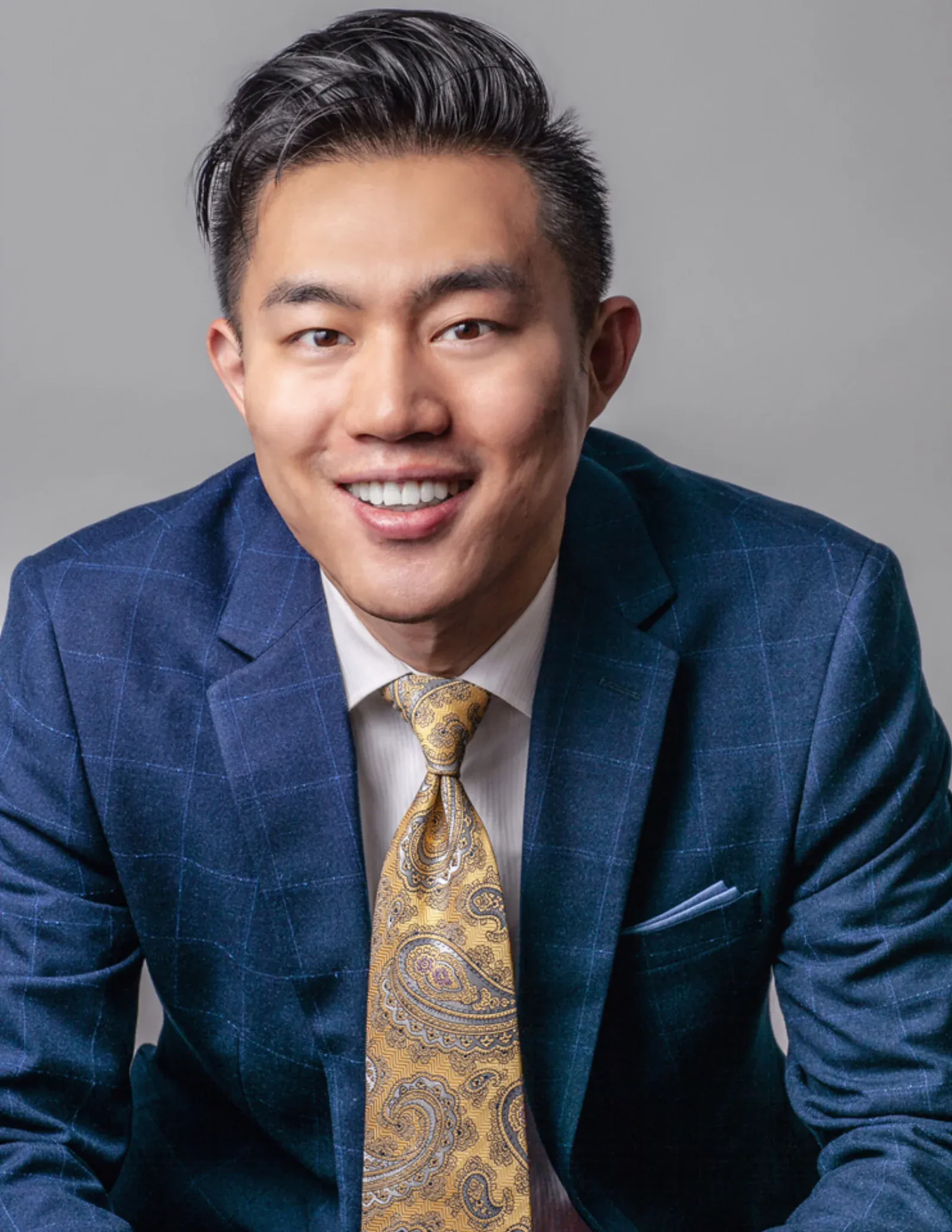
Licensed REALTOR® · Sutton Group — 1st West Realty · Burnaby, BC
Conversion Rates Applied (to CAD)
Converted Value
Planning an international purchase?
Get your conversion plus a clear read on the 20% foreign-buyer tax and the federal ban — what actually applies to you in Burnaby.
- No cap on bringing money in — but declare CAD $10,000+ to CBSA when physically crossing the border (non-declaration penalties: 5%–50% of the undeclared amount, plus possible forfeiture).
- Banks typically embed a 2%–4% spread into the rate plus a $30–$80 wire fee; specialist FX brokers often charge 0.1%–0.5% over mid-market — on $500,000 that gap is approximately $10,000–$17,500.
- The 20% foreign buyer tax (Additional PTT) adds 20% of fair market value for foreign nationals in Metro Vancouver (including Burnaby) — on a $1.2M home that is $240,000 extra.
- The federal ban blocks most foreign buyers until January 1, 2027 in Census Metropolitan Areas (Burnaby is within one), with narrow exceptions.
- Mainland Chinese buyers face a US$50,000 per person per year SAFE FX quota; enhanced KYC tightened in January 2026 flags any attempt to split transfers across family members.
- Expect a source-of-funds review under AML rules from your notary, lawyer, lender, and receiving bank — prepare documentation early.
- Rates shown here are indicative (Bank of Canada daily averages), not transactional — always get a live quote from your provider.
(1) BC's 20% Additional Property Transfer Tax: Foreign nationals buying residential property in Metro Vancouver — including Burnaby — owe an additional 20% of the property's fair market value at closing, on top of regular PTT. Use the PTT calculator to model this cost. On a $1,200,000 home, that is $240,000 in tax alone.
(2) The federal foreign-buyer ban: The Prohibition on the Purchase of Residential Property by Non-Canadians Act is in effect until at least January 1, 2027 and may prohibit your purchase entirely. Currency conversion is moot if you are not legally permitted to buy. Confirm your eligibility with a real estate lawyer before proceeding.
How international buyers move money to Canada
The most common route is an international wire transfer from your home bank directly to a Canadian bank account or, at completion, to your notary's or lawyer's trust account. The funds are converted to Canadian dollars either before or at the time of the transfer, depending on your provider and account setup. Two service channels dominate:
Your home bank
The most familiar option, but usually the most expensive. Banks quote you an all-in rate that includes a 2%–4% margin baked into the exchange rate — making the cost invisible because you never see a line-item fee. Add a wire fee of $30–$80 per transfer. On a $500,000 conversion at a 3% bank spread, approximately $15,000 is absorbed in the margin before your money arrives.
Specialist FX broker or platform
Dedicated currency brokers and regulated fintech platforms typically quote at 0.1%–0.5% over the mid-market rate and often waive wire fees on transfers above a threshold. For a $500,000 conversion at 0.3%, the total cost is around $1,500 — versus $15,000 through a bank at 3%. Most also offer forward contracts, allowing you to lock in a rate today for a future settlement date.
- Always compare the all-in rate on your actual amount, not the headline spot rate.
- Ask whether fees are bundled into the rate or charged separately.
- Confirm the broker is registered with FINTRAC as a Money Services Business.
- Allow extra business days for transfers — international wires can take 1–5 days and may require additional correspondent bank routing.
What you must declare and what gets reported
Two separate regulatory frameworks govern international money movement into Canada. They are often confused but serve different purposes.
CBSA border declaration
If you are physically carrying or mailing CAD $10,000 or more in cash, travellers cheques, money orders, or other monetary instruments across the border, you must declare it to the Canada Border Services Agency. There is no upper limit — moving any amount is entirely legal. Only the failure to declare is an offence, carrying a penalty of 5%–50% of the undeclared amount plus possible seizure and forfeiture of the funds. Declaring is free, fast, and routine.
FINTRAC reporting
Banks and other financial entities are required by law to file an Electronic Funds Transfer (EFT) Report with FINTRAC for any international wire of $10,000 or more, and a Large Cash Transaction Report for cash deposits of $10,000+ (aggregated within a 24-hour window). This is automatic monitoring — not a tax, not a restriction, and not something that blocks your transfer. It is simply Canada's anti-money laundering surveillance system operating in the background.
Documented funds move freely into Canada regardless of size. The only conduct that creates serious legal risk is under-declaring at the border or structuring transfers (deliberately splitting amounts to stay below $10,000 thresholds). Both are federal offences.
A note for buyers in mainland China
China's State Administration of Foreign Exchange (SAFE) limits each individual to a conversion of US$50,000 per person per year of RMB into foreign currency. For most Burnaby property purchases — which typically require hundreds of thousands of Canadian dollars — this is the dominant practical constraint, not any Canadian rule.
As of January 2026, enhanced KYC procedures at Chinese banks more aggressively flag attempts to distribute conversions across family members or friends (structuring). Working around the quota through informal channels or splitting across relatives carries significant legal and financial risk in China, and will also trigger a source-of-funds inquiry at the Canadian end.
Legitimate approaches
- Plan across multiple years. US$50,000 per quota period per person means a family of four can convert US$200,000 per year through legitimate channels.
- Apply to SAFE for an above-quota approval. Applications supported by documentation — such as a signed purchase contract — can be approved for specific purposes.
- Work with a cross-border accountant and licensed FX provider. A professional who understands both the Chinese FX rules and Canadian AML requirements can structure the transfer legally and prepare the paperwork for Canada's source-of-funds review.
Buyers converting HKD or SGD are not subject to the SAFE quota. Hong Kong and Singapore have no individual FX conversion caps, so the primary constraints for those buyers are Canada's CBSA declaration rules, FINTRAC reporting, the BC 20% Additional PTT, and the federal ban — not FX access.
The taxes a foreign buyer actually pays in BC
Currency conversion is only one part of the financial picture. The tax load on a foreign buyer purchasing in Burnaby is substantial and must be budgeted separately from the purchase price.
Additional Property Transfer Tax — the 20% foreign buyer tax
Foreign nationals, foreign corporations, and taxable trustees buying residential property in five designated regions of BC — including the Metro Vancouver Regional District, which covers Burnaby — pay an Additional Property Transfer Tax equal to 20% of the property's fair market value. This is on top of the standard PTT. On a $1,200,000 Burnaby home, that additional tax alone is $240,000. It is prorated to the foreign buyer's ownership share, so a foreign national buying 50% with a Canadian citizen would owe 20% × 50% of fair market value.
Standard Property Transfer Tax
All buyers — including those who are exempt from the Additional PTT — also pay the general PTT: 1% on the first $200,000, 2% from $200,000 to $2,000,000, and 3% above $2,000,000. On a $1,000,000 home, the general PTT is $18,000.
- Limited exemptions to the Additional PTT include confirmed BC Provincial Nominee Program holders buying a principal residence, and certain Canadian-controlled limited partnership structures — a legal structure question for a BC real estate lawyer.
- GST at 5% also applies to newly built or substantially renovated homes — relevant for presale condos around Metrotown, Brentwood, and Lougheed Town Centre.
Can a foreign buyer even purchase right now? The federal ban
The Prohibition on the Purchase of Residential Property by Non-Canadians Act has been in force since January 1, 2023, and was extended to at least January 1, 2027. It bans most non-Canadians from purchasing residential property of three units or fewer inside a Census Metropolitan Area — Burnaby is within the Vancouver CMA.
Violating the ban carries fines of up to $10,000 and a potential court-ordered sale of the property. It is not a technicality to navigate around — it is a hard legal prohibition.
Who can still buy
- Canadian citizens and permanent residents are not "non-Canadians" under the Act — the ban does not apply to them at all.
- Protected persons (convention refugees and certain others with protected status) are exempt.
- Eligible work-permit holders with at least 183 days of validity remaining on their permit, who have not previously purchased a residential property in Canada under the exemption, may buy one property.
- Certain international students who have filed Canadian income taxes for at least five years and were physically present in Canada for at least 244 days in each of those five years — strict criteria that most students will not meet.
- A foreign national buying jointly with a Canadian citizen or permanent resident spouse, where the Canadian spouse is on title.
A government review is underway regarding what framework replaces the ban after January 1, 2027. In the meantime, the rules are a moving target. Always get confirmation of your specific eligibility from a qualified BC real estate lawyer before writing an offer, paying a deposit, or signing a presale contract.
Proving where your money came from (source of funds)
Under Canadian anti-money laundering (AML) legislation, every regulated professional involved in a real estate transaction is required to understand and document the origin of the funds being used. Your notary or lawyer, your lender, and your receiving bank may each independently request source-of-funds documentation.
- Employment income: recent pay stubs, T4s or foreign equivalents, employer letters.
- Business proceeds: corporate financial statements, sale agreements, shareholder loan records.
- Property sale: the sale contract, completion statement, and bank records showing receipt.
- Inheritance or gift: probate documents, gift letters, bank statements showing the transfer.
- Investment liquidation: brokerage statements showing the sale and the deposit.
Scrutiny rises with transaction size, jurisdictions classified as higher-risk under FINTRAC guidelines, and politically exposed person (PEP) or head of international organization (HIO) status. Preparing a clean, organized paper trail before you sign a purchase contract — rather than scrambling at completion — prevents last-minute delays that can threaten a closing date.
Practical tips for international buyers funding a Burnaby purchase
The FX piece is often the last item international buyers think about, but it can meaningfully change your bottom line. A few steps taken early make a significant difference.
- Open a CAD account early. Having a Canadian bank account in place before you start shopping means funds can arrive quickly once a deal is struck.
- Lock your rate with a forward contract. Once your offer is accepted, use a forward contract to fix today's rate for the expected completion date — often 1–2 months out, or longer for presales. Rate moves between offer and completion can be substantial.
- Compare the all-in rate on your actual transfer amount. Get a live quote from at least one specialist FX broker alongside your bank's rate. The comparison should be on the same amount and same settlement date.
- Build in time for China's SAFE approvals and documentation. If you require SAFE above-quota approval, the process takes time and requires a purchase contract — start early.
- Budget for the 20% Additional PTT and the ban analysis first. These dwarf any FX saving. Knowing whether you can legally buy, and what the full tax load is, should be the first conversations — before any currency conversion.
- Assemble your source-of-funds documents early. A complete paper trail from the start avoids delays at the completion stage when every party is working to a tight timeline.
Rates shown are indicative reference rates based on Bank of Canada daily average rates, published once each business day at approximately 4:30 PM Eastern Time. They are for estimation and planning only — your real rate will differ based on your provider's spread and any fees charged.
Banks typically add a 2%–4% margin to the exchange rate (plus a $30–$80 wire fee); specialist FX brokers typically charge 0.1%–0.5% over the mid-market rate. Always get a live quote on your actual transfer amount.
This converter shows currency conversion only. It does not include wire fees, broker spreads, BC's 20% Additional Property Transfer Tax, standard PTT, GST on new construction, legal and notary fees, or any other closing cost. Two critical caveats it cannot capture: (a) the 20% foreign buyer tax — which may add hundreds of thousands of dollars to your actual cost — and (b) the federal foreign-buyer ban to January 1, 2027, which may prohibit a purchase entirely.
This is general informational guidance, not financial, tax, immigration, or legal advice. Confirm your eligibility and total costs with a licensed BC realtor, cross-border tax professional, immigration lawyer, and your bank or FX provider before committing funds.
Figures reviewed May 2026. Tax rates, thresholds, and market data change — always confirm current numbers with the linked primary sources or a licensed professional before acting.
Frequently asked questions
References
- 01Daily exchange rates — Bank of Canada
- 02Travelling with CAN$10,000 or more — Canada Border Services Agency
- 03Reporting electronic funds transfers — FINTRAC
- 04Additional property transfer tax for foreign entities and taxable trustees — Province of British Columbia
- 05Two-year extension to the ban on foreign ownership of Canadian housing — Department of Finance Canada
- 06Prohibition on the Purchase of Residential Property by Non-Canadians Act — CMHC
- 07Source of Funds Guidance — Federation of Law Societies of Canada
Related calculators
Rescission Calculator
Calculate the 3-business-day cooling-off deadline and the 0.25% rescission fee for BC contracts.
Mortgage Calculator
Estimate your monthly mortgage payments, down payment thresholds, and CMHC insurance premiums.
Property Transfer Tax
Calculate BC Property Transfer Tax, including first-time buyer and newly built home exemptions.
Navigating a Burnaby purchase from outside Canada.
Foreign-buyer eligibility, the 20% Additional PTT, source-of-funds requirements, and FX timing all need to align before an international purchase can close. Jersey works with buyers across time zones — let's map out what applies to your situation before you commit to anything.
Talk to Jersey