Investors ask me about Brentwood and Metrotown every week. Almost nobody asks about Lougheed, and when they do, it's usually a question about the mall construction, not the tenant base. That's a gap worth looking at, because Lougheed sits at the intersection of two facts that don't change with the market cycle: a university that cannot house its own students, and the cheapest town-centre entry price in Burnaby.
The structural tenant base: SFU can't house its students
Simon Fraser University sits on top of Burnaby Mountain. Its student housing math is public and blunt: the third-phase residence now under construction adds 445 beds when it opens in fall 2027, bringing the campus total to 3,016 beds, enough to house about 8% of the student population. SFU's own long-term master plan target is 10% of full-time students.
Flip that number around. Even after the new building opens, more than nine in ten SFU students need to live somewhere off campus. Some commute from family homes across the region. But a meaningful share rent, and they rent where the bus to campus is short and the rent is lower than Vancouver: Lougheed, Burquitlam, and the corridor along the mountain's south slope.
This is what I mean by structural demand. A tower boom can stall. A university enrolment pipeline, backed by a housing shortfall the university itself publishes, does not.
The transit link does the heavy lifting
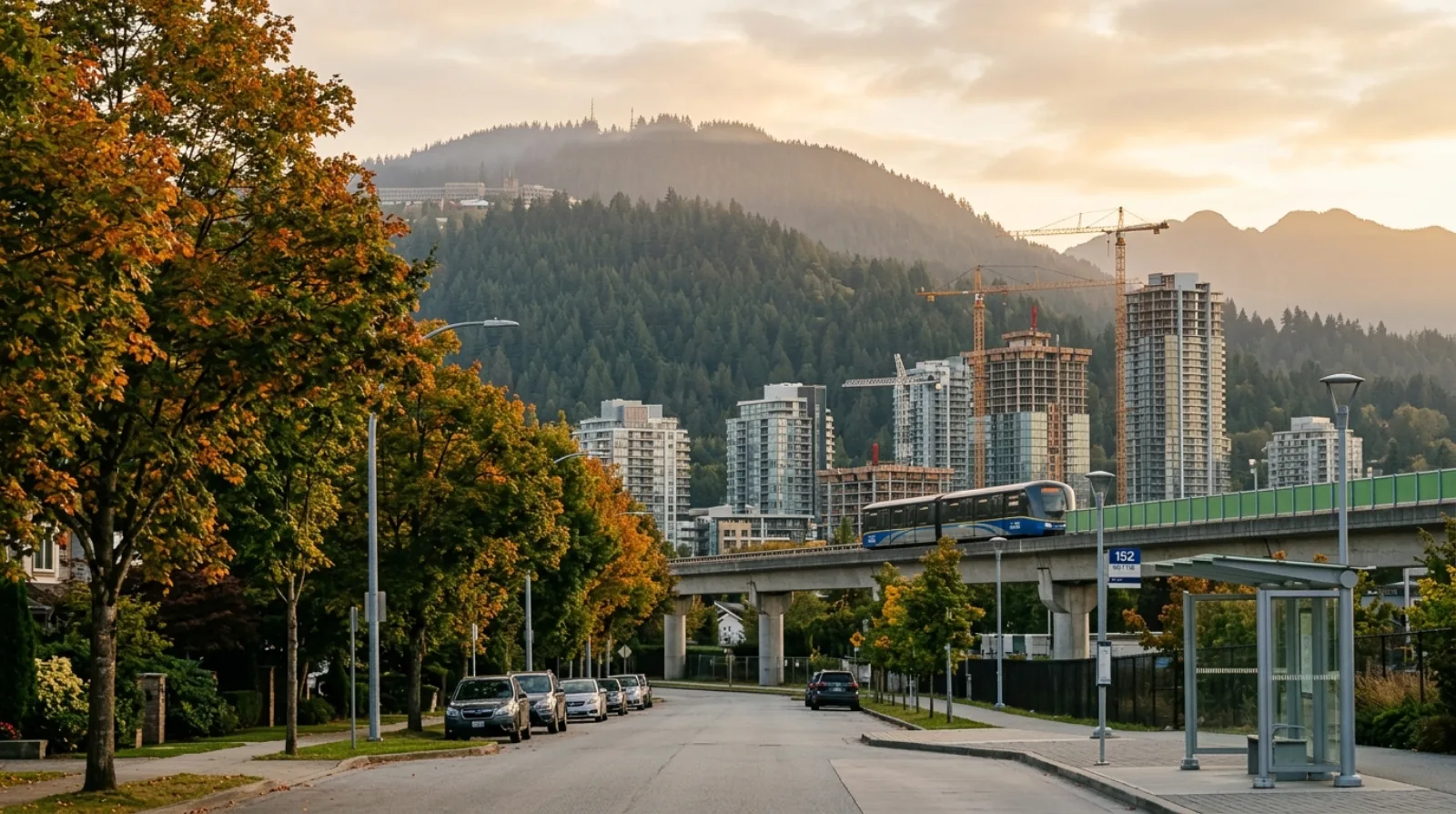
Two bus routes carry this tenant base up the mountain. The 145 runs between Production Way-University Station and SFU Exchange, and the 143 connects Burquitlam Station to campus. Both stations are one and two SkyTrain stops from Lougheed Town Centre Station.
For a student tenant, that means a rental near Lougheed, Production Way, or Burquitlam works like campus-adjacent housing without mountain pricing. For a landlord, it means your realistic tenant pool includes students, university staff, and the hospital and tech employment along the Millennium Line, not one single renter profile.
The entry price: Burnaby's cheapest town centre
Lougheed is the earliest-stage of Burnaby's four town centres. The City of Lougheed redevelopment is planned at more than 23 towers and over 10,000 homes on roughly 37 acres, a build-out valued around $7 billion, but most of it is still to come. Early-stage means two things at once: less polish today, and a lower buy-in than Brentwood or Metrotown for a comparable new condo.
For yield math, the purchase price is the denominator. Metro Vancouver's condo benchmark sat at $695,200 in June 2026 per Greater Vancouver REALTORS, and Lougheed-area units typically trade below the premium town centres. A lower entry price against a steady rent is how gross yield improves without any heroics. I walk through the full yield method, and what counts as a real operating expense, in cap rate and rental yield on a Burnaby condo.
One honesty check: CMHC put the Metro Vancouver vacancy rate at 3.7%, the highest in more than 30 years. Softer rents are region-wide, and Lougheed is not exempt. The student demand argument is about resilience of occupancy near campus links, not about rents only going up.
What I'd actually look for near Lougheed
From working this corridor, the checklist I run for investor clients:
- Walk time to a station or the 143/145 stops. Student tenants choose on commute first. A unit 8 minutes from Burquitlam Station beats a nicer unit 25 minutes away.
- Two-bedroom layouts over studios. Students share. A functional two-bedroom rents to two tenants and holds occupancy better between school years.
- Strata health before finish quality. Same rule as everywhere in Burnaby: read the depreciation report and minutes before falling for the lobby. My strata document guide covers what to check.
- September lease cycles. Near-campus rentals turn over on the academic calendar. Plan vacancies and rent-setting around it.
- The bylaw layer. Long-term rental is the strategy here. Short-term rental is closed off three ways in Burnaby, as I covered in the Airbnb rules post, and BC's 2.3% cap governs increases for sitting tenants.
How this fits the bigger investor picture
Lougheed is one leg of the neighbourhood story in my Burnaby investment property guide: the early-stage, yield-friendlier end, against Brentwood and Metrotown's premium-price, compressed-yield end, and Edmonds in between. If you're weighing the growth story rather than the rental angle, the Lougheed-Burquitlam growth corridor post covers the redevelopment side.
Key Takeaways
- After the fall 2027 residence opens, SFU will house about 8% of its students on campus (3,016 beds). The other 90%+ live off campus, and the renters among them cluster along the transit corridor to the mountain.
- The 145 (from Production Way-University Station) and 143 (from Burquitlam Station) are the campus links; proximity to them is the single biggest driver of student-tenant appeal.
- Lougheed is Burnaby's cheapest town-centre entry point, with a 23-tower, $7-billion master plan still mostly ahead of it.
- Metro Vancouver vacancy is 3.7%, the highest in 30+ years; the case for this corridor is occupancy resilience near campus, not immunity from soft rents.
- Buy on commute time, two-bedroom layouts, and strata health; plan around September lease cycles; forget short-term rental.
Frequently Asked Questions
Is buying a rental near SFU a good investment in 2026?
The demand side is structural: SFU can house only about 8% of its students on campus even after the fall 2027 residence opens, so the rest rent or commute. The return side is the same as anywhere in Burnaby in 2026: expect roughly 3 to 4% gross and 2 to 2.5% net on a condo after real expenses. The near-campus corridor argues for steadier occupancy, not magic yields.
Where do SFU students actually rent in Burnaby?
Along the bus links to campus. The 145 runs from Production Way-University Station to SFU Exchange and the 143 from Burquitlam Station, so rentals near Lougheed Town Centre, Production Way, and Burquitlam stations work as campus-adjacent housing. Units within a short walk of those stations and stops rent easiest to student tenants.
Why is Lougheed cheaper than Brentwood or Metrotown?
It is the earliest-stage town centre. The City of Lougheed master plan calls for more than 23 towers and 10,000+ homes on the old mall site, but most of that build-out is still ahead. Less finished neighbourhood today means a lower entry price, which is exactly what improves the yield denominator for an investor willing to hold through the construction years.
Can I run a student rental as an Airbnb instead?
No. BC's principal residence requirement, Burnaby's business licence rules, and strata bylaws each independently block short-term rental of a pure investment unit in Burnaby. Near-campus units are long-term rental assets on an academic-year cycle.
Sources
- SFU News: Construction underway on new student residence building (May 2025): 445 beds, fall 2027 opening, 3,016 total beds, ~8% of student population housed.
- TransLink: Route 145 SFU Exchange/Production Station and Route 143 SFU Exchange/Burquitlam Station.
- The City of Lougheed - Wikipedia: 37 acres, 23+ towers, 10,000+ homes, ~$7B build-out.
- Greater Vancouver REALTORS: Monthly Market Report, June 2026: condo benchmark $695,200.
- CMHC: Rental Market Report: Metro Vancouver vacancy 3.7%.
This article is one leg of the Burnaby investment property guide, which ties together the yield math, buy-vs-build strategy, landlord rules, and suite economics in one place.
Thinking about the Lougheed corridor, or weighing it against Brentwood? I run the actual numbers with clients before they write anything. Get in touch or start with a no-obligation valuation.

Sutton Group - 1st West Realty · Medallion Club Member (Top 10%)
Burnaby real estate advisor and multiplex strategist. Licensed REALTOR® with Sutton Group - 1st West Realty, specializing in residential, multiplex, and redevelopment transactions across Burnaby and Metro Vancouver.