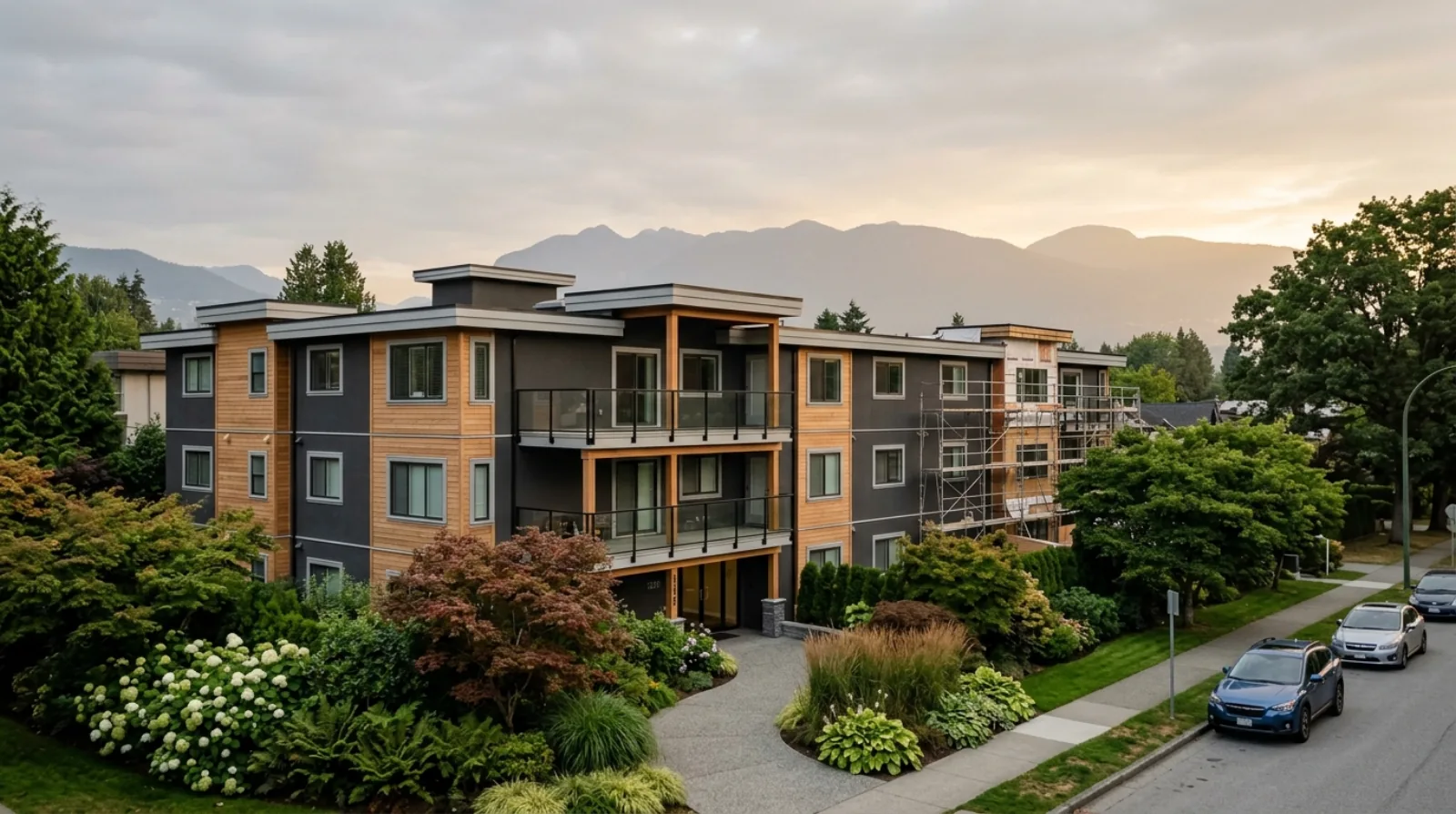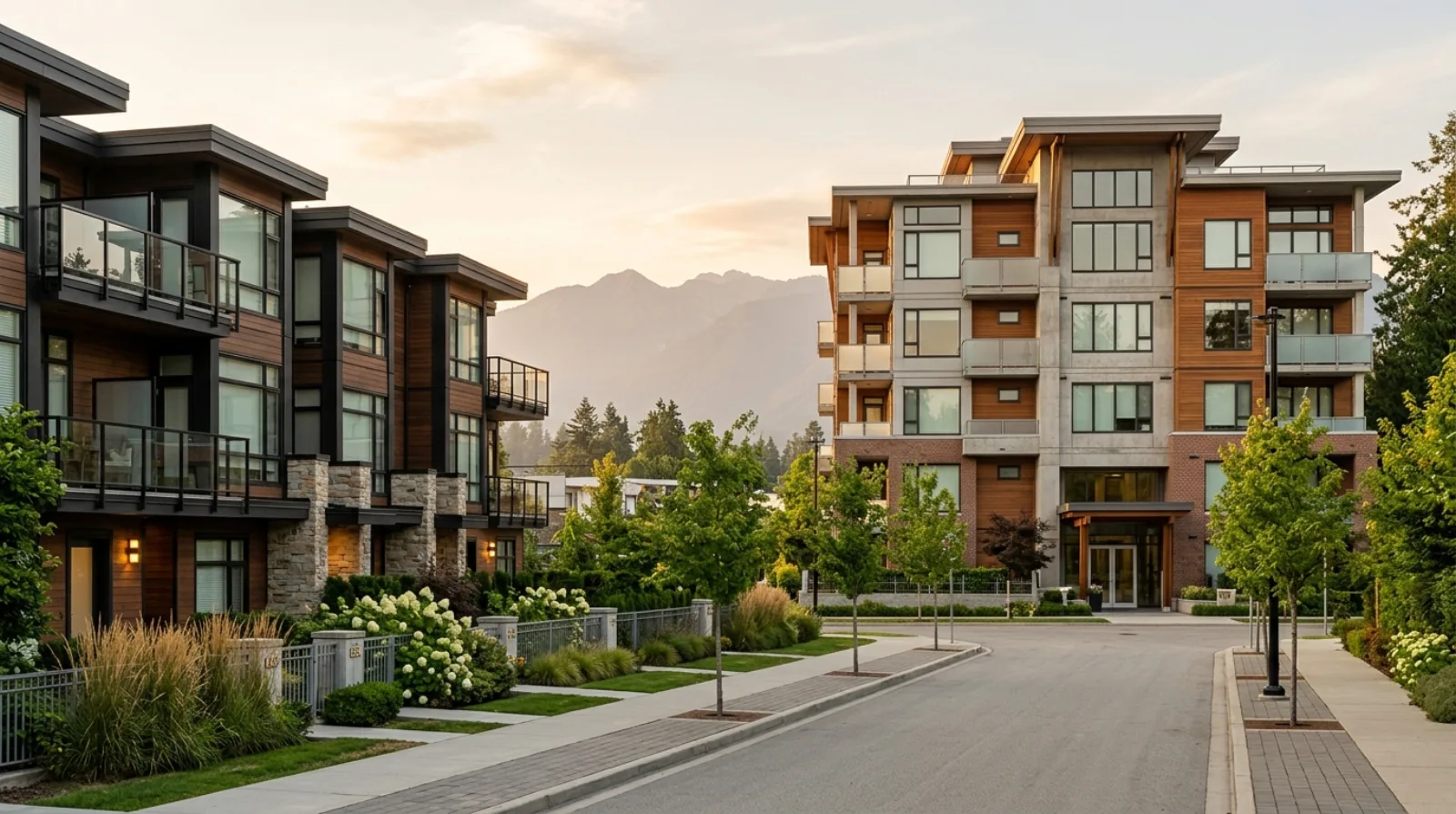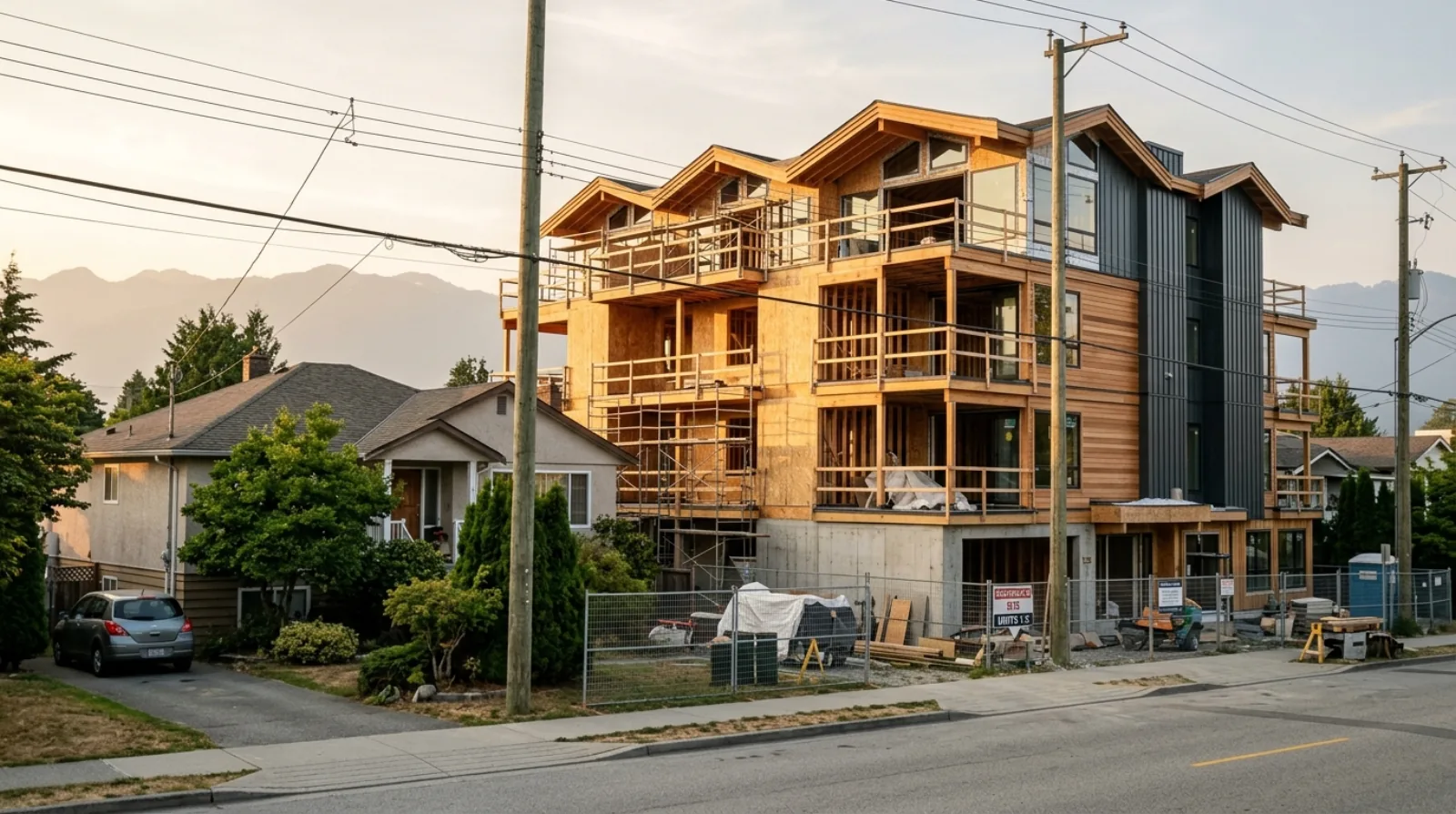
Bill 44, the provincial small-scale multi-unit housing (SSMUH) legislation, changed what you can build on most single-family lots in Burnaby. A lot that used to hold one house can now, in many cases, support a multiplex of four to six units. That's created a real decision for a lot of Burnaby owners: build the multiplex yourself, or sell the land to a builder who will?
I work with owners on both sides of this. Neither answer is universally right. Let me lay out the honest comparison.
The Two Paths
Sell to a builder. You sell your lot, as-is, to a developer or builder who takes on the entire project. You get a lump sum, you're done, and you walk away with no construction risk. The builder profits from the difference between what they paid you, plus construction costs, and what the finished units sell for.
Build it yourself. You keep the land, arrange financing and permits, hire a builder, and sell (or hold and rent) the finished units. You capture the development profit, but you take on every risk in the project.
The core trade is simple: selling to a builder swaps profit for certainty. Building yourself swaps certainty for profit. The right choice depends on which one you actually want.
What a Builder Will Pay
A builder's offer for a multiplex-eligible lot is driven by what's called residual land value: they estimate the finished value of the completed units, subtract construction costs, subtract their profit and financing, and what's left is what they can pay for the land.
That means a builder's offer moves with the market. When finished-unit prices soften, as they have across Burnaby in 2026, residual land values soften too. Burnaby detached homes are down 7.1% year-over-year and the composite benchmark is down about 6% (Greater Vancouver Realtors, June 2026). Builders price that risk into their offers.
Location drives the rest. A lot near a SkyTrain station or inside a transit-oriented development area commands more, because the finished units sell for more and, in TOD zones, more density may be possible. The transit-oriented lot analysis covers how proximity to the line changes the math.
What You Keep by Building Yourself
The development profit a builder would otherwise capture can be substantial, potentially several hundred thousand dollars on a well-run multiplex, depending on the lot, the design, and the market at completion. That's the upside, and it's real.
But you earn that profit by taking on the builder's job:
- Financing. You carry a construction loan through the build. Interest accrues on money you've borrowed against units that don't exist yet.
- Cost risk. Construction costs can overrun. Material prices, labour availability, and permit delays all hit your budget, and you absorb every dollar over estimate.
- Timeline risk. A multiplex takes roughly 18 to 24 months from permit to completed sale. That's a long time to be exposed to a market that's currently drifting down about 4.1% versus the prior 90-day average (MLS® board records, July 2026). You're selling into whatever market exists in 2027 or 2028, not today's.
- Execution. Permits, the City of Burnaby approval process, managing a builder, dealing with problems on site. This is a job, not a passive investment.
I walk through the numbers on a real example in the multiplex pro forma walkthrough, which shows exactly where the profit and the risk sit.
The 2026 Market Changes the Math
Here's the part that matters most right now. In a rising market, building yourself usually wins, because prices climb during your 18-to-24-month build and the finished units sell for more than you projected. The market does some of the work for you.
Burnaby in 2026 is not a rising market. Prices are down across every property type year-over-year, inventory sits around 2,010 active listings, and the absorption rate is 6.8%, firmly buyer's-market territory (MLS® board records, July 2026). Building into a soft market means you're betting the market recovers by the time your units are ready. It might. It might not. Nobody rings a bell at the bottom.
This doesn't mean don't build. It means price the risk honestly. The mistake I see owners make is comparing a builder's offer to what they think they'd net by building, without subtracting the value of the certainty they're giving up. Certainty has a price. In a soft, uncertain market, that price is higher.
Taxes: Don't Skip This
The tax treatment differs sharply between the two paths, and it changes the real return.
Selling the raw lot. If the lot was your principal residence for the full ownership period, the sale may qualify for the Principal Residence Exemption, meaning no capital gains tax on the appreciation. This is one of the most valuable positions in the tax code. Confirm eligibility with your accountant, especially if you've rented part of it or held it as investment.
Building and selling units. When you build to sell, the CRA generally treats the profit as business income, not a capital gain, and GST applies to new residential units. That's a very different tax outcome than selling raw land. The GST on new multiplex units guide covers the GST piece, and the capital gains guide covers the rest. Get professional tax advice before you commit to either path, because the after-tax numbers can flip the decision.
Who Each Path Suits
Sell to a builder if: you want certainty, you don't want to manage a construction project, you're retiring or relocating, you may qualify for the Principal Residence Exemption, or you're not comfortable carrying development risk into a soft market.
Build yourself if: you have development experience or a trusted builder partner, you can carry the financing and cost risk, you can wait 18 to 24 months for the payout, and you have the appetite to bet on the market at completion.
There's also a middle path some owners take: lot assembly, where you combine your lot with neighbours' to sell a larger, more valuable development site to a builder. The lot assembly guide covers when that's worth exploring.
Key Takeaways
- Selling to a builder swaps development profit for certainty. Building yourself swaps certainty for profit.
- A builder's offer is driven by residual land value, so it moves with the market. Soft finished-unit prices mean lower land offers.
- Building yourself can capture several hundred thousand dollars in development profit, but you take on financing, cost, timeline, and execution risk.
- The 2026 buyer's market (prices down about 6% year-over-year) raises the risk of building into a soft market, so price that risk honestly.
- Taxes differ sharply: selling raw land may qualify for the Principal Residence Exemption, while building to sell is often taxed as business income plus GST.
Frequently Asked Questions
Should I build a multiplex on my Burnaby lot or sell it to a builder?
It depends on your appetite for risk and time. Selling to a builder gives you a lump sum with no construction risk. Building yourself captures the development profit but means carrying financing, cost overruns, and 18 to 24 months of market risk. In today's soft Burnaby market, the certainty of selling is worth more than it would be in a rising market.
How much will a builder pay for a Bill 44 multiplex lot in Burnaby?
A builder's offer is based on residual land value: the finished value of the units minus construction costs, financing, and profit. Because Burnaby unit prices are down year-over-year, residual land values are softer in 2026. Lots near SkyTrain or in transit-oriented development areas command more because the finished units sell higher and more density may be allowed.
What are the tax differences between selling my lot and building the multiplex?
Selling the raw lot may qualify for the Principal Residence Exemption if it was your primary home, meaning no capital gains tax. Building units to sell is generally taxed as business income, not a capital gain, and GST applies to new residential units. These are very different after-tax outcomes, so get professional tax advice before deciding.
Is 2026 a good time to build a multiplex in Burnaby?
It's a higher-risk time. Prices are down about 6% year-over-year and the market is in buyer's territory (2,010 active listings, 6.8% absorption). Building means selling finished units into the 2027 or 2028 market, which may recover or may not. Building can still work with the right lot and builder, but the market risk is real and should be priced in.
Sources
- Greater Vancouver Realtors, June 2026 MLS® HPI
- MLS® board records, July 2026 (Burnaby active listings, absorption rate, price trend)
- Province of BC, Small-Scale Multi-Unit Housing (Bill 44)
Related Guides
- Burnaby Multiplex Pro Forma Walkthrough
- Buy-and-Hold vs Multiplex Investment in Burnaby
- GST on New Multiplex Units in Burnaby
- Burnaby Lot Assembly for Multiplex
---
If you own a multiplex-eligible lot in Burnaby and you're weighing building versus selling, I'll give you a straight read on what a builder would pay today versus what building yourself realistically nets after risk and tax. That comparison is where the decision gets clear. Reach out directly or book a valuation to start with your lot's value. Jersey Li, PREC, Sutton Group - 1st West Realty

Sutton Group - 1st West Realty · Medallion Club Member (Top 10%)
Burnaby real estate advisor and multiplex strategist. Licensed REALTOR® with Sutton Group - 1st West Realty, specializing in residential, multiplex, and redevelopment transactions across Burnaby and Metro Vancouver.