Skip to content
JERSEY LIPERSONAL REAL ESTATE CORPORATION
Metrotown / Burnaby

Metrotown, where the value is in the details.

Metrotown is the densest, most transit-rich corner of Burnaby and, by some measures, the second downtown of Metro Vancouver. Around the SkyTrain station you have the largest mall in British Columbia, a 90-acre park, three concentric rings of high-rise towers, and a Town Centre Plan that calls for roughly 125,000 residents by buildout. The result is a neighbourhood that buyers either love on first walk or quietly cross off the list. This guide is for the people still deciding. It covers what you actually get for the price, where the plan is headed, and the tradeoffs nobody puts in a marketing brochure.

Jersey LiSutton Group — 1st West RealtyMedallion ClubUpdated
Metrotown, Burnaby
Avg Price$980K
Price Range$580K – $2.3M
Walk Score91
Transit Score92
HousingHigh-rise concrete condos & townhomes
MultiplexN/A in core — adjacent SFH pockets eligible
Quick Answer

Metrotown is Burnaby's regional town centre: high-rise condo living, two SkyTrain stations, the largest mall in BC, and Central Park at the doorstep. Most inventory is one- and two-bedroom apartments between $580K and $1.1M, with sub-penthouses pushing past $2M. It rewards buyers who want walkable transit-first living and accept density, traffic, and a mall-centred public realm in exchange.

Key Takeaways
  • 01Metrotown is Burnaby's metropolitan core and the largest of its town centres, served by the Metrotown and Patterson stations on the Expo Line.
  • 02Metropolis at Metrotown is the largest shopping mall in British Columbia and the neighborhood's retail anchor.
  • 03Housing is predominantly high-rise concrete condos spanning a wide range of ages, from 1990s towers to current concrete product.
  • 04The Expo Line reaches downtown Vancouver (Waterfront) in 20 minutes with no transfer.
  • 05Central Park, a large green space on the Vancouver border, is the neighborhood's major park and a counterweight to the retail density.
  • 06Metrotown offers the widest resale inventory and price range of any Burnaby town centre, with older towers at the value end.
Your Metrotown Agent

Your Metrotown real estate agent — Jersey Li.

Metrotown has the widest price range of any Burnaby town centre, and that gap is exactly where buyers get hurt. A 1990s concrete tower and a 2023 concrete tower can sit two blocks apart at very different prices per square foot, and only one of them may be a good buy for your plan. I know which older buildings are well run and which carry deferred maintenance behind a deceptively low strata fee.

For investors, Metrotown is a rental-depth play. I underwrite it on real absorption and on each building's actual bylaws, not on a brochure yield — Maywood walk-ups, Beresford towers, and Central Park-facing product are distinct sub-markets that behave differently.

For sellers, I position your unit against the correct comparable set so you are neither undercut nor overpriced, and I market it in the languages Metrotown's buyers actually search in.

  • Old-vs-new tower analysis across Metrotown's full range, from 1990s concrete to current product
  • Investor underwriting on real rental absorption and per-building bylaws
  • Multilingual service for one of Canada's most diverse postal codes
  • Medallion Club agent (top 10% REBGV) — Sutton Group — 1st West Realty
Jersey LiSutton Group — 1st West RealtyMedallion ClubLicensed (RECBC)
Work with Jersey in Metrotown
On This Page
(01)

The Metrotown Character

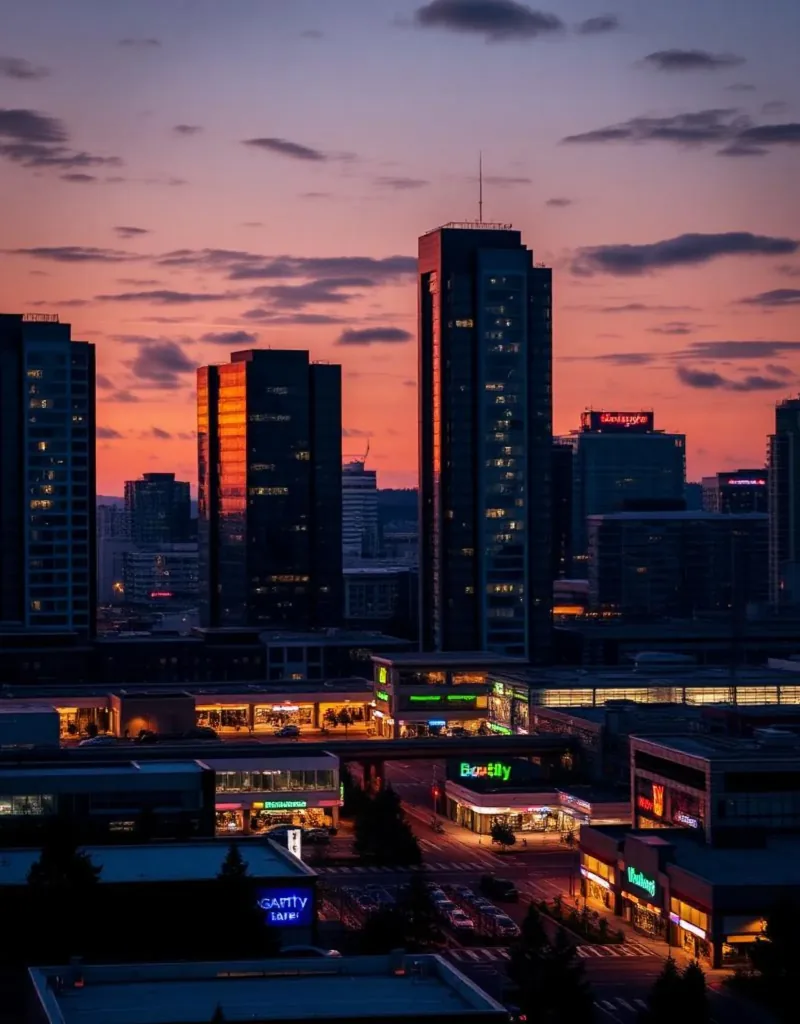
Metrotown sits along Kingsway between Boundary Road and Royal Oak, anchored by the Expo Line and Metropolis at Metrotown. The mall, with roughly 450 stores and 27 million annual visits, is the gravitational centre. Almost every conversation about the neighbourhood starts there, which tells you something about how the public realm has developed: indoors, climate-controlled, retail-led. The City of Burnaby is working to change that through the Metrotown Town Centre Plan, but the current experience is still mall-forward.

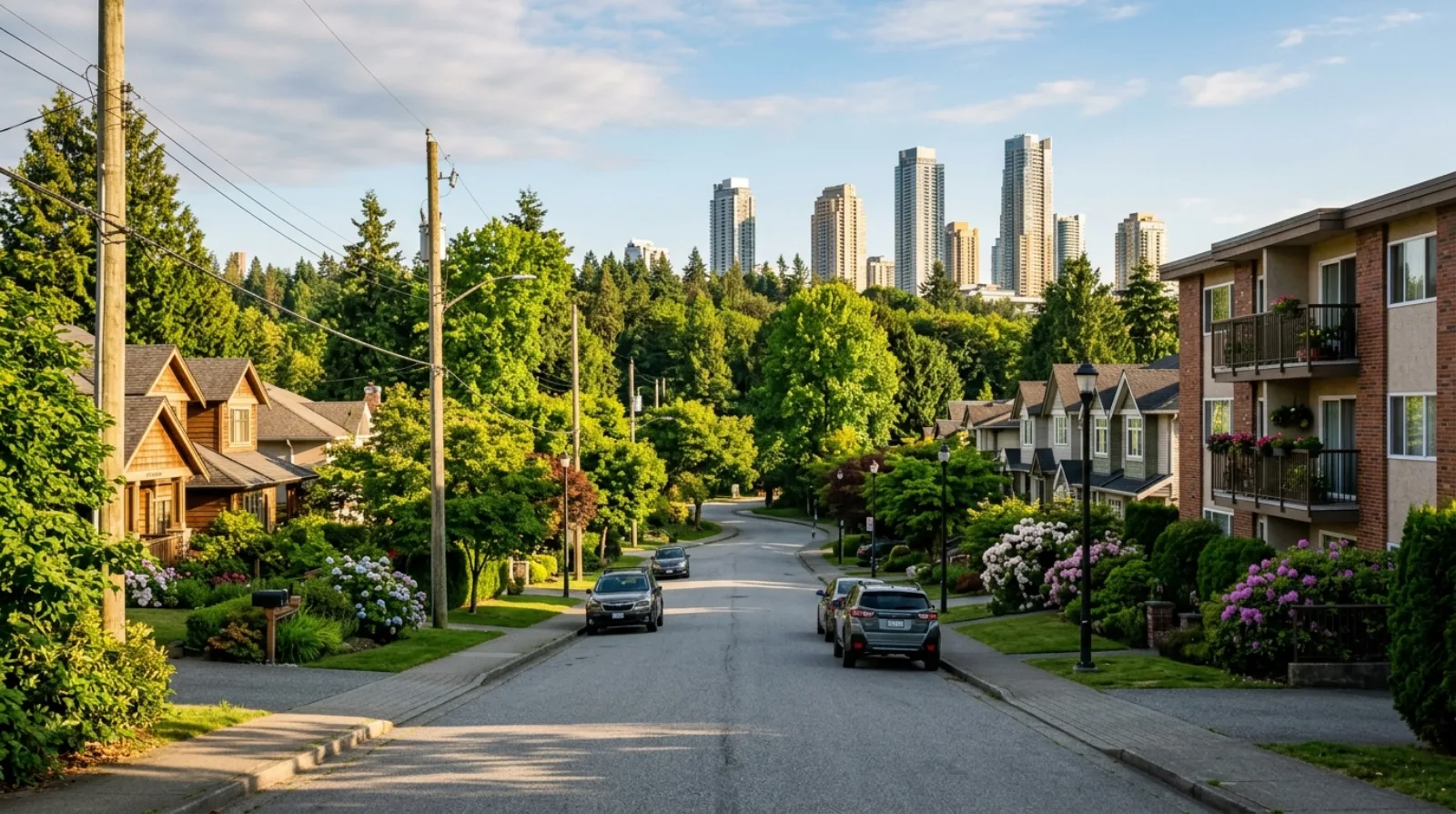
Outside the retail core, the character shifts quickly. Walk three blocks south and you reach Central Park, 90 acres of second-growth forest, tennis courts, the Swangard Stadium, and a pitch-and-putt course. Walk three blocks east and you reach a 1960s and 70s low-rise apartment belt that is steadily being assembled and redeveloped. Walk north of Kingsway and you find Maywood, a denser pocket of older walk-ups and newer towers around Bonsor Recreation Complex. The landscape is marked by a dramatic contrast between the high-density glass and concrete walls along Kingsway and the quiet, tree-lined residential streets that slope downwards toward the south.

Demographically, Metrotown is one of the most diverse postal codes in the country. Cantonese, Mandarin, Korean, Tagalog, and Farsi are common on the street. The food scene reflects this: Crystal Mall food court is a regional draw, Old Orchard Shopping Centre handles the everyday grocery and pharmacy run, and Kingsway from Willingdon to Royal Oak is a long, unglamorous strip of legitimate regional cooking. It is a highly international, fast-paced environment where the retail hubs feel busy from morning till night, but quiet down quickly once the mall and the Skytrains stop running.

What Metrotown is not, at least not yet, is a neighbourhood with a strong street-level character. Sidewalks on Kingsway are wide but car-dominated, and the retail pod along the street level is primarily occupied by bank branches, bubble tea shops, and large franchises. The plan calls for a redesigned high street along Beresford Street, and the bones are visible if you walk it on a Saturday, but the finished product is years out. Buyers should price the current condition, not the rendering.
(02)

The Real Estate Market

Roughly 85 percent of housing stock in the Metrotown core is apartment condominium. The remainder is townhouse, a thin sliver of rental purpose-built, and a small number of older single-family pockets along the edges. If you are buying here, you are almost certainly buying a strata apartment.

Pricing breaks into three tiers. Older concrete and wood-frame buildings from the 1990s and early 2000s trade between $580K and $750K for a one-bedroom and $750K to $950K for a two-bedroom. Mid-cycle towers built between 2010 and 2018 sit roughly 15 to 25 percent higher. New and near-new product from developers like Concord, Anthem, Intracorp, and Thind clears $1,100 to $1,400 per square foot, with sub-penthouses in projects like Concord Metrotown and Sovereign pushing past $2 million. Townhouses inside the concrete podiums are highly sought after by young families, typically trading in the $1.2M to $1.6M range.

Days on market vary sharply by tier. Older buildings with strong financials and reasonable strata fees sell in two to three weeks. New product competes with the developer's remaining inventory and with assignments, which keeps resale prices disciplined and occasionally soft. This is one of the few Burnaby submarkets where supply has materially caught up with demand at the high end. It is essential to work with a local advisor to analyze the pricing history of specific developers, as build quality and layout functionality differ significantly.

Maintenance fees deserve attention. Towers with concierge, pool, gym, and guest suites routinely run $0.55 to $0.75 per square foot per month. On a 900-square-foot two-bedroom, that is $500 to $675 monthly before property tax and utilities. Older buildings with simpler amenity packages run closer to $0.35 to $0.45, which over a ten-year hold compounds into a meaningful number. Buyers must scrutinize strata minutes for upcoming mechanical replacements or elevator modernization, which can lead to special assessments in older, under-funded strata corporations.

(03)

Living in Metrotown

Daily life in Metrotown is organised around walking and transit. The Expo Line gets you to downtown Vancouver in 20 minutes and to Production Way in 12. Metrotown Station and Patterson Station are roughly 700 metres apart, which means almost every address in the core sits inside a 10-minute walk of rapid transit. For people who have decided to live without a car, or with one car for two adults, the math works.

Groceries and everyday errands are easy. T&T, Save-On-Foods, Real Canadian Superstore, Crystal Mall's wet market, and a half-dozen smaller Asian grocers cover the spectrum. Restaurants skew Asian and casual, with a deeper bench than most non-residents realise. For dining out, most residents drive to Metrotown, Crystal Mall, or across to Vancouver. Metrotown closes early, and late-night options are sparse.

Green space is better than the high-rise skyline suggests. Central Park is a genuine regional asset, comparable in scale to Queen Elizabeth Park. Bonsor Park, Maywood Park, and the smaller pocket parks woven into newer developments add up. Bonsor Recreation Complex offers a pool, gym, and library under one roof, with annual memberships that undercut private gyms. Jogging trails, outdoor pitches, and fitness paths are heavily used by the active local demographic.

The honest negatives. Traffic on Kingsway and Willingdon is heavy from 7 to 9 in the morning and 3 to 7 in the afternoon, and it is not improving. Construction noise is constant somewhere within earshot, and will be for the next decade. Lower-floor units near Beresford or along the SkyTrain guideway can pick up train noise; this is a unit-by-unit question, not a building-wide one, and worth testing on a viewing. The sheer volume of people around the transit interchange during rush hours can feel overwhelming for buyers looking for a quiet suburban lifestyle.

(04)

Development & Investment Outlook

The Metrotown Town Centre Plan, adopted in 2017 and updated since, is the single most important document for any buyer or investor in this area. It re-zones a large catchment around the station for high-density mixed-use, with heights ranging from mid-rise along the edges to 50-plus storeys at the core. The plan envisions Metrotown growing from roughly 30,000 to 125,000 residents over several decades.

What that means in practice: assembly pressure on older three- and four-storey walk-ups is real and ongoing. Buildings that look unremarkable today are sitting on land worth substantially more than the sum of their suites. Owners in those buildings have, in several recent cases, received offers at 1.5 to 2 times unit appraisal value. This is not a guaranteed outcome, but it is a tailwind for patient buyers in the right buildings.

On the new-build side, the picture is more mixed. Pre-sale absorption has slowed since 2022, several projects have been re-launched or restructured, and standing inventory in completed towers is the highest it has been in a decade. For a long-horizon owner-occupier, this is an opportunity. For an investor underwriting on short-term rent growth, it is a reason to be cautious. Rental cap rates in new product currently run 3.0 to 3.5 percent gross, which after strata fees, taxes, and vacancy is a negative-leverage trade at today's mortgage rates.

Office and institutional density is the missing piece. Metrotown has retail and residential in abundance; it is short on workspace. The plan addresses this, and a handful of office components are coming, but the neighbourhood will be residential-dominant for the foreseeable future. That has implications for daytime street life and for the type of retail that survives.

(05)

Community & Amenities

Bonsor Recreation Complex is the civic heart of the neighbourhood. It houses a six-lane pool, a fitness centre, a branch of the Burnaby Public Library, and program space used by community groups across the demographic spectrum. The Burnaby Neighbourhood House operates programs throughout Metrotown and Maywood, with a particular focus on newcomer settlement.

Schools serving the area include Marlborough Elementary, Maywood Community School, and Chaffey-Burke Elementary at the elementary level, with Moscrop Secondary as the main catchment for high school. Moscrop has a strong reputation, particularly for STEM, and catchment boundaries are a regular consideration for family buyers. The catchments are tight and the school district occasionally adjusts them, so verify before committing.

For shopping, Metropolis at Metrotown is the obvious anchor, but the more interesting daily-use centres are Crystal Mall, Station Square, and Old Orchard. Crystal Mall in particular is a regional Chinese-Canadian retail and dining hub with a food court that draws from across the Lower Mainland. Station Square is the newer mixed-use complex directly over the SkyTrain station, with T&T and a more transit-oriented retail mix.

Healthcare and services are well covered. Burnaby Hospital is a 10-minute drive, several walk-in clinics and pharmacies are within the core, and dental and specialist offices are abundant in the surrounding office buildings. For families, the proximity of pediatric services and the recreation complex is part of the practical case for the neighbourhood.

(06)

Metrotown vs Brentwood vs Downtown Vancouver

Brentwood is the closest comparison. Both are SkyTrain-anchored town centres with new tower clusters around a mall. Brentwood is roughly a decade behind Metrotown in buildout, which means newer product, fewer older buildings to choose from, and a smaller resale market. Brentwood is also further from downtown Vancouver in commute time, but closer to the North Shore. Pricing per square foot in new product is roughly comparable; resale in older stock is generally cheaper in Metrotown because there is more of it.

Downtown Vancouver offers a denser, more walkable street grid, deeper restaurant and cultural scene, and direct waterfront access. It also costs 25 to 40 percent more per square foot for comparable product, with higher property taxes and a more competitive rental market for investors. For buyers who work downtown and want to walk to the office, the premium is defensible. For buyers who work in Burnaby, Surrey, or Richmond, Metrotown wins on commute and price.

The decision usually comes down to two questions. First, how much do you value being inside a finished, street-level urban fabric today versus paying less for a neighbourhood still under construction? Second, how often do you actually use the things downtown Vancouver offers that Metrotown does not? Honest answers to both tend to point to clear choices.

(07)

What to Watch For When Buying in Metrotown

Building financials first. Pull the depreciation report, the last three years of AGM minutes, and the contingency reserve fund balance before you fall in love with a unit. Metrotown has buildings with healthy reserves and disciplined boards, and it has buildings with deferred envelope work that will hit owners with six-figure special assessments. The difference is not visible from the lobby.

Parking and storage. New buildings increasingly come with one stall, or none, for one-bedroom units. If you own a car or plan to, confirm the stall is deeded, not leased, and check the resale value of parking in the building. In some Metrotown towers, a second stall trades for $40,000 to $75,000 on its own.

Noise and view sightlines. Lower floors facing Kingsway, Willingdon, or the SkyTrain guideway pick up traffic and train noise. Higher floors facing east or south often have view corridors that will be built out over the next ten years. Ask for the city's view-cone documents and overlay them on the building's orientation. A view you paid a premium for can disappear into someone else's tower.

Assignment and pre-sale risk. If you are buying new construction, understand the assignment market in the building and the standing developer inventory. Completing into a building with 40 unsold units and active assignments puts downward pressure on your appraisal and on rents.

Strata bylaws on rentals and pets. Most Metrotown buildings now permit rentals and pets following provincial changes, but bylaws on short-term rental, move-in fees, and renovation approvals vary widely. Read them before, not after.

(08)

My Take as Your Advisor

Metrotown is a good buy for a specific buyer, and an awkward one for everybody else. The specific buyer is someone who genuinely wants to live without a car or with shared use of one, values transit time over street character, and is comfortable with high-density apartment living for at least a five-to-ten-year hold. For that buyer, the price per square foot, the transit access, and the long-term plan all line up.

For families with two young children who want a yard and a quieter street, Metrotown is rarely the right answer, even though the schools and recreation are good. The trade you are making, three-bedroom apartment living in a tower, works for some households and grinds on others. I would rather have that conversation honestly upfront than sell a unit that gets re-listed in 18 months.

For investors, I am cautious on new product at current rents and rates, and more constructive on well-run older buildings with assembly potential. The neighbourhood is not finished, and the people who do well here over the next decade will be the ones who bought into the right building, not just the right postal code. That is the work I do with clients.

If you are weighing Metrotown against Brentwood, Lougheed, or downtown Vancouver, I am happy to walk you through actual numbers on actual units rather than averages. Averages hide most of the decisions that matter.

Getting Around

Commute times from Metrotown.

SkyTrain figures are in-vehicle times from TransLink's official station-to-station chart; add a few minutes for transfers and waiting. Bus and nearest-station legs are noted per row. Driving times are approximate and off-peak.

DestinationBy TransitBy Car
Downtown Vancouver (Waterfront)20 min direct on the Expo Line — no transfer.≈20–30 min off-peak
Commercial–Broadway (East Vancouver)10 min direct on the Expo Line.≈15–20 min off-peak
Brentwood≈18 min — 10 min to Commercial–Broadway, transfer to the Millennium Line, 8 min to Brentwood.≈12–18 min off-peak
New Westminster10 min direct on the Expo Line.≈12–15 min off-peak
SFU (Burnaby Mountain)Frequent direct campus bus — no SkyTrain leg needed.The #144 bus runs directly from Metrotown Station up to the SFU campus.≈15–20 min off-peak
YVR / Vancouver AirportRoughly an hour via a Canada Line connection.≈25–35 min off-peak
Side by Side

Metrotown vs Brentwood vs Lougheed: Burnaby's three Town Centres.

MetrotownBrentwoodLougheed
SkyTrain lineExpo LineMillennium LineExpo + Millennium interchange
In-vehicle ride to Waterfront20 min (direct)≈18 min (1 transfer)≈29 min (1 transfer)
Primary retail anchorMetropolis at Metrotown (BC's largest mall)The Amazing BrentwoodThe City of Lougheed / Lougheed Town Centre
Housing stockMixed-age high-rise, widest rangeNew concrete high-rise (mostly post-2018)Older stock plus new master-planned towers
Build-out stageMature, most retail-denseMid build-out, cranes into the 2030sEarliest stage — most disruption, most upside
Role in Burnaby's planMetropolitan core (largest)Town CentreTown Centre

SkyTrain times are in-vehicle minutes from TransLink's official station-to-station chart; add transfer and wait time. Metropolis at Metrotown is the largest shopping mall in British Columbia.

Multiplex Outlook

What multiplex means for this neighborhood.

The Metrotown core is high-density apartment and is not eligible for the small-scale multi-unit housing (multiplex) framework — the underlying zoning already permits substantially more. Multiplex potential exists in adjacent single-family pockets, particularly south of Kingsway between Royal Oak and Patterson, along the eastern edges of Central Park, and in the transitional blocks north of Moscrop. Lot frontages, slope, and existing tenancies vary lot by lot. If multiplex development is your goal, the right play is usually one ring outside Metrotown, not inside it.

Multiplex Advisory →
The Local Map

What's around you.

Metrotown — approximate centre · map © OpenStreetMap contributorsView larger map ↗

Schools

  • Marlborough Elementary — central Metrotown catchment, highly multicultural student body
  • Maywood Community School — south of Kingsway, offers community resources and family programs
  • Chaffey-Burke Elementary — north and west of core, quiet residential catchment
  • Moscrop Secondary — strong academic reputation, popular math and science streams
  • Burnaby South Secondary — Rumble Street secondary serving south Metrotown catchment
  • Nelson Elementary — southeast edge, smaller school footprint

Parks & Recreation

  • Central Park — 90-hectare park with pitch-and-putt, trails, Swangard Stadium, tennis courts
  • Bonsor Park — sports fields, playground, next to Bonsor Rec Complex
  • Maywood Park — quiet neighborhood park south of Kingsway
  • Patterson Park — linear green space adjacent to Patterson Station
  • Old Orchard Park — local park adjacent to shopping center

Transit

  • Metrotown Station (Expo Line) — high-frequency SkyTrain hub to downtown Vancouver
  • Patterson Station (Expo Line) — western edge of core, quiet commuter access
  • Royal Oak Station (Expo Line) — eastern boundary, serves residential pockets
  • R6 RapidBus — high-speed corridor bus along Kingsway
  • Route 130 — Willingdon corridor bus connecting Metrotown to Brentwood and SFU

Shopping & Dining

  • Metropolis at Metrotown — largest mall in British Columbia, anchors the retail core
  • Crystal Mall — Metro Vancouver's premier Chinese-focused indoor shopping centre
  • Station Square — modern outdoor retail street with PriceSmart and multiple dining options
  • Old Orchard Shopping Centre — established neighborhood strip mall on Kingsway
  • Kingsway Corridor — dynamic street retail strip featuring regional dining and services
Who Thrives Here

Who this neighborhood suits.

Frequently Asked

Questions buyers ask about Metrotown.

Is Metrotown a good place to live?

+

For the right household, yes. Metrotown offers two SkyTrain stations, the largest mall in British Columbia, Central Park, and one of the most diverse food scenes in Metro Vancouver, all inside a 10-minute walk. It works well for car-light professionals, newcomers, and downsizers who value transit and walkability. It works less well for families wanting a yard, buyers who prioritise quiet streets and historic character, or anyone uncomfortable with continuous construction and high-rise density. The honest answer depends on the household, not the neighbourhood.

What are condo prices in Metrotown?

+

As of mid-2026, one-bedroom apartments in older concrete buildings start around $580,000 and reach roughly $750,000. Two-bedrooms in the same vintage run $750,000 to $950,000. New and near-new product clears $1,100 to $1,400 per square foot, putting two-bedrooms in the $1.0 to $1.4 million range and sub-penthouses past $2 million. Maintenance fees vary widely: amenity-heavy towers run $0.55 to $0.75 per square foot per month, while simpler older buildings run closer to $0.35 to $0.45. Annual property tax is roughly 0.28 percent of assessed value.

Is Metrotown safe?

+

Metrotown's reported crime rate is broadly in line with other dense Metro Vancouver town centres. Property crime, particularly theft from vehicles and bike theft, is the most common issue, concentrated around the mall and SkyTrain stations. Violent crime is uncommon in residential blocks. The RCMP operates a community policing office at the mall, and most newer buildings have on-site concierge or security and well-lit underground parkades. As with any transit-rich urban area, standard precautions apply: do not leave valuables in vehicles, use building amenity spaces during posted hours, and choose units above the second floor where practical.

How is parking in Metrotown?

+

Parking is a real consideration. New one-bedroom units increasingly come with one stall or none, and the city's parking requirements for new towers have been reduced in line with transit-oriented policy. Visitor parking in newer buildings is tight, and street parking along Kingsway and the adjacent residential blocks is either metered, permit-only, or restricted during peak hours. The mall offers 9,000 parking stalls, which absorbs most retail demand. If you own a car, confirm your stall is deeded rather than leased, and check whether the building has a waitlist or resale market for additional stalls.

What is the investment outlook for Metrotown condos?

+

Mixed, and tier-dependent. New construction faces real headwinds: pre-sale absorption has slowed, standing inventory is elevated, and gross cap rates of 3.0 to 3.5 percent leave investors in negative-leverage territory at current mortgage rates. Older buildings with assembly potential under the Town Centre Plan tell a different story, with several recent owners receiving offers well above unit appraisal value. The 10-year outlook for the area is constructive given the density plan and transit infrastructure, but the next two to three years will reward patient, building-specific underwriting rather than broad bets on the postal code.

Can families live in Metrotown? Yes or no?

+

Yes, with caveats. Catchment schools including Moscrop Secondary and Marlborough Elementary are well regarded. Central Park, Bonsor Recreation Complex, and Burnaby Public Library serve families well. The constraint is housing format: three-bedroom apartments are available but priced at a premium, and townhouses are scarce. Families who adapt to vertical living and use the parks and rec complex as their backyard do well here. Families who want a fenced yard, a quiet street, and a detached home are better served in Buckingham, Garden Village, or further east in Burnaby. The right answer depends on what your household actually uses on a Saturday morning.

Is Metrotown safe?

+

Metrotown is Burnaby's busiest regional hub, and the area around Metropolis at Metrotown and the stations carries heavy daytime foot traffic that most people find comfortable. Like any major transit-and-retail node, it sees more late-night transient activity than a quiet residential block, so ordinary city awareness around the mall and station after closing is sensible. The residential towers a few blocks off Kingsway feel calmer than the retail core. I'm glad to assess specific buildings and exposures with you rather than generalize across such a large area.

Is Metrotown good for families?

+

Metrotown can work for families who prioritize walkability and transit over yard space. Central Park is a genuine asset, schools serve the catchment, and two- and three-bedroom condos exist, though they are a smaller share of inventory and command a premium. The trade-offs are density, traffic, and a public realm still centred on the mall rather than on parks and main streets. Families wanting detached space usually look to South Burnaby or the Heights, while those who value a transit-first lifestyle often do well here through the early-school years.

What is parking like in Metrotown?

+

Parking is tight in the way you'd expect from Burnaby's densest node. Older buildings sometimes offer only one stall per unit, or none, while Metropolis at Metrotown provides large public parking for shopping trips. Because the Expo Line and frequent buses make a car optional for many residents, some buyers deliberately choose units without a stall to lower the price. If you own two vehicles or need guaranteed visitor parking, confirm the building's stall count and visitor rules before you commit.

Are Metrotown condos a good investment?

+

Metrotown offers the widest range of condo inventory and price points of any Burnaby town centre, which gives investors both entry-level options in older towers and value-add potential. Rental demand is strong thanks to the transit and retail draw. The main thing to underwrite is building health: the older stock that looks cheap per square foot can carry deferred maintenance and special-levy risk, so the depreciation report and contingency fund matter as much as the headline price. As always, confirm the strata's long-term rental rules before buying to rent.

Further Reading

More on Metrotown & Burnaby.

Keep Exploring

Other Burnaby neighborhoods.

Free · No Obligation

What's your Metrotown home worth today?

Get a data-driven valuation from a local Burnaby expert — not an automated guess.

Considering Metrotown?

Let's talk about your Metrotown move.

Whether you're buying, selling, or weighing a multiplex play, I'll give you the straight read. No pressure, no obligation.

Book a Consultation
CallFree Valuation