Want a lot-specific read on this decision? The Burnaby multiplex advisory is where I model all four paths — sell, hold, build, or co-develop — against your actual property. This post explains the framework.
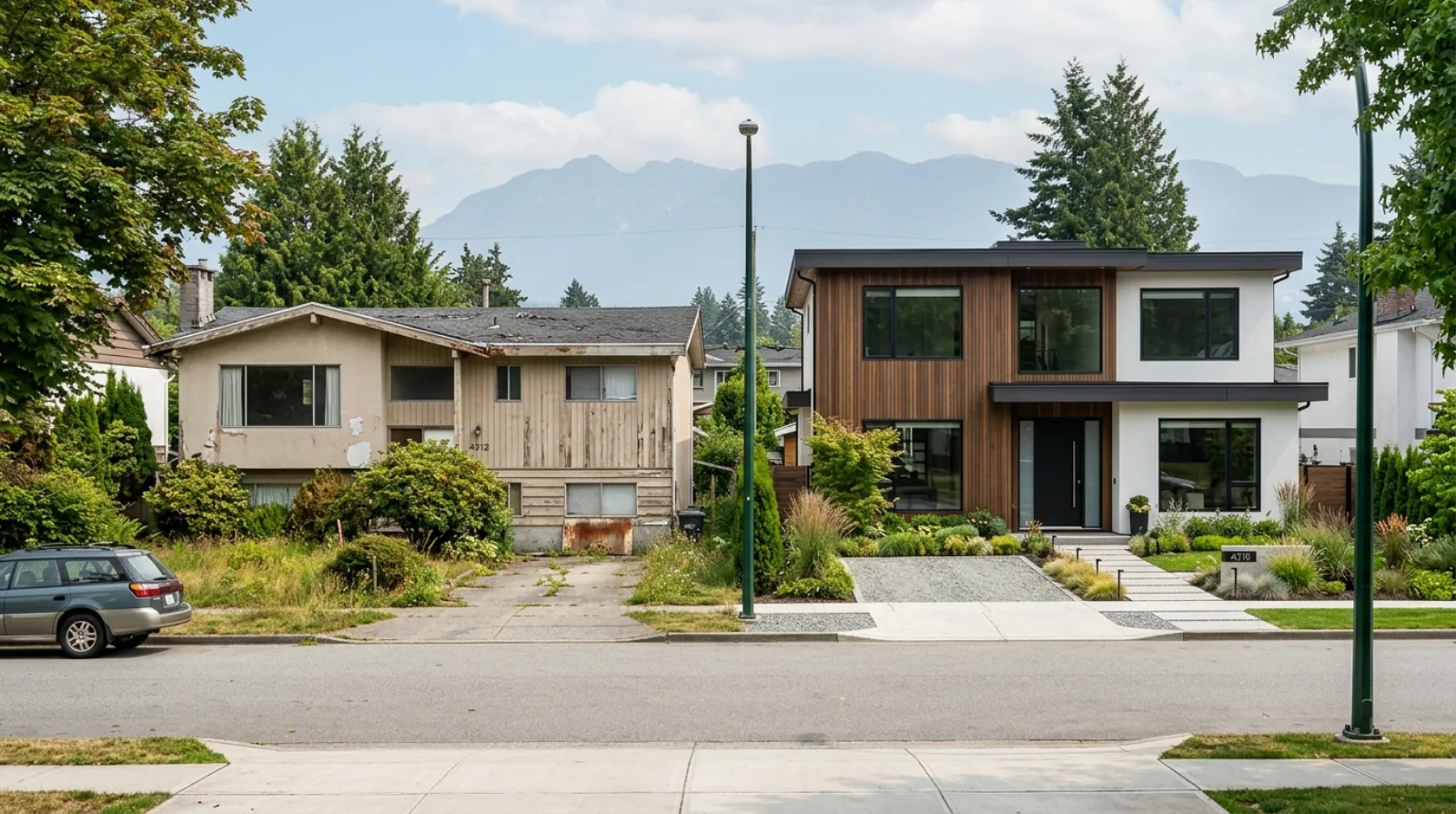
Every few weeks an owner asks me a version of the same question. They have a detached house on a decent Burnaby lot, they have read that they can build a multiplex now, and they want to know whether to sell, hold, or build something themselves.
There is no universal answer, and I distrust anyone who gives you one without seeing the property. The right call depends on your lot, your finances, your tax position, and how much risk and time you actually have. But there is a framework that makes the decision a lot clearer, and it starts with understanding the rules that changed the math in the first place.
Why this decision exists now
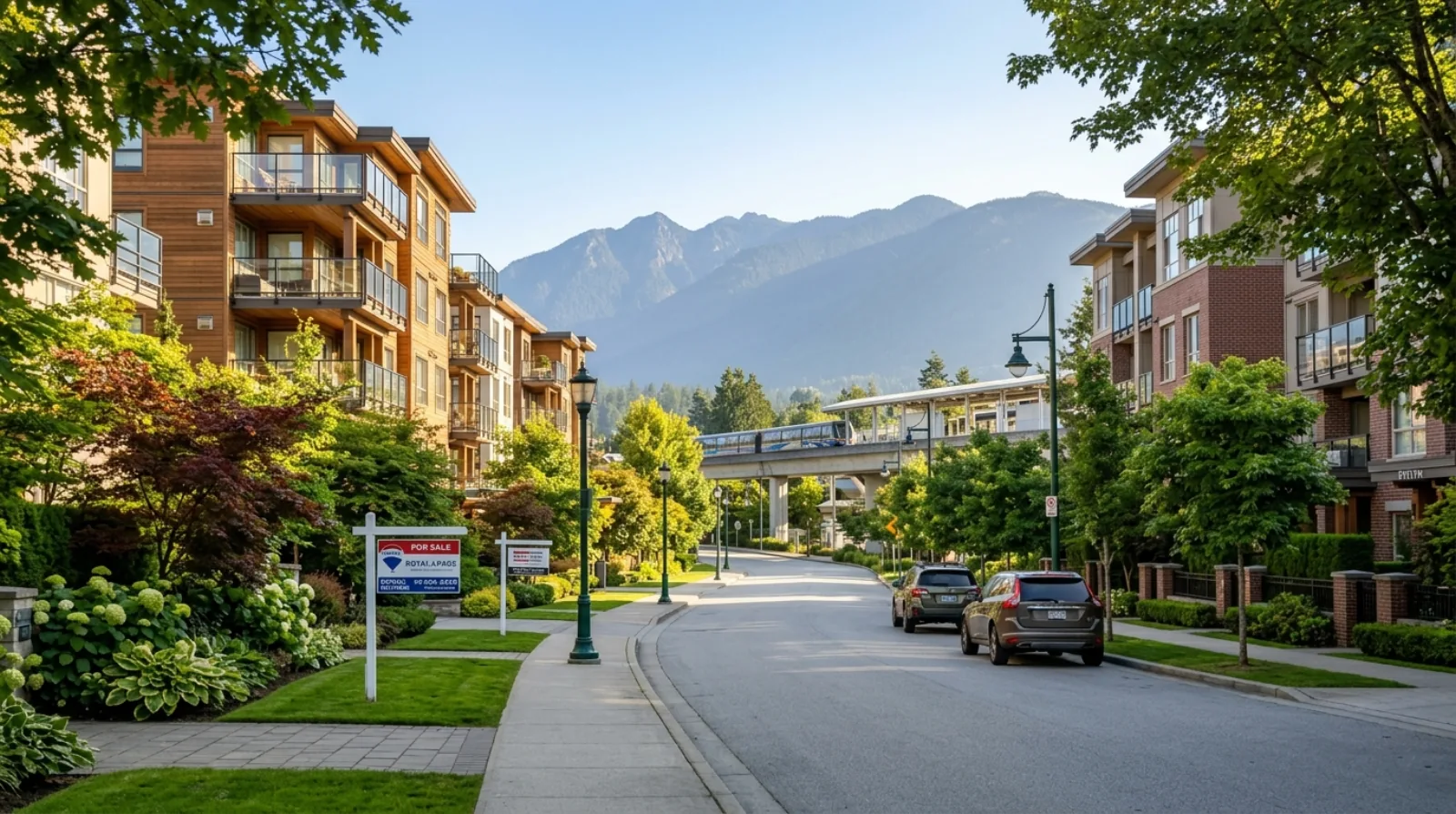
Under BC's Bill 44 small-scale multi-unit housing law, Burnaby now permits three to four units on most detached lots, and up to six on larger lots within 400 metres of frequent transit. That is what put "redevelop" on the menu for ordinary owners who would never have considered it five years ago. I covered the mechanics in what Bill 44 actually changed for Burnaby homeowners, and that piece is worth reading first if you are new to it.
One caveat before the three doors: Burnaby tightened its multiplex height and massing rules in late 2025. If your thinking is based on the original 2024 allowances, your numbers are probably out of date. With that context, here are the three doors.
Door one: sell as-is
Selling as-is is the cleanest option. You list, you close, you move on. Metro Vancouver's detached benchmark sat near $1.84 million in spring 2026, according to Greater Vancouver REALTORS, and Burnaby tracks close to that regional figure. Jersey Li markets to both family buyers and builders at the same time, so if real builder competition exists on your lot, you capture it without leaving money on the table.
The only real question is whether your lot carries a development premium. If your lot has genuine redevelopment potential, a builder may pay more than an end user would. But that depends on the same site factors I always come back to: frontage, depth, grade, lane access, and location relative to transit. If those are weak, the builder premium may not exist, and a clean sale to a family is your best outcome anyway.
Selling as-is also sidesteps every risk in the other two doors. No construction financing, no permitting timeline, no market exposure stretched across two or three years. You convert to cash at today's price and the uncertainty becomes someone else's problem. For a lot of owners, especially those near retirement or needing liquidity, that certainty is worth more than a speculative upside they would lose sleep over.
Door two: hold
Holding makes sense if you can afford to wait and you believe your area is still early in its repricing. Some of Burnaby's transit-oriented pockets have seen meaningful land value growth, and a few owners are right to sit tight.
But holding is not a free option, and I push back when people treat it like one. You carry the property: taxes, maintenance, insurance, and the opportunity cost of equity locked in a single asset. You miss whatever else you could have done with that money. And you are betting that future policy and demand stay favourable, which is a real bet, not a guarantee. The late-2025 rule tightening is a useful reminder that the regulatory wind can shift mid-hold.
My honest read: hold only if you have a specific reason to expect more upside, not just a vague sense that prices always go up. A good hold candidate is a property where time genuinely improves the buyer pool, a block where assemblies are forming or transit is arriving, not just one where you are postponing a hard decision. Holding should be a thesis, not a default.
Door three: redevelop it yourself
This is the highest-effort path, and the one owners romanticize the most. Building a multiplex in Burnaby means personally taking on design, permitting, financing, and construction risk — with a realistic timeline of 18–24 months from permit application to occupancy, and construction costs averaging $400–$450 per square foot in 2026 for a wood-frame multiplex, according to builder estimates I hear consistently from the VanPlex network. That math has to close before the redevelop door is actually open.
Redevelopment is a capital project, not a real estate transaction. You need design and consultants, construction financing, the tolerance to manage a build through delays and cost overruns, and a realistic exit plan for the finished units. Your money is committed throughout, which is a real carrying cost that rarely shows up in the headline projections.
Most owners I talk to are not set up to be developers, and I tell them so. That is not a criticism. It is a different job with a different risk profile and a different skill set. Some people are genuinely built for it and do very well. Many are better off selling the development potential to someone who does it for a living and capturing that premium without the headaches. The trap is assuming the full developer margin is yours when, in reality, a chunk of it is payment for risk and expertise you may not have.
How to actually decide
Start with the property, not the headline. The right answer comes from real numbers about your specific lot, not from what your neighbour heard their house is worth.
- Get a realistic as-is value and an honest read on whether builders would compete for it.
- Confirm your lot's true redevelopment potential under the current R1 rules, not the theoretical maximum or the looser 2024 version.
- Be honest about your timeline, your available capital, and your tolerance for risk.
- Model the carrying cost of holding against a specific upside thesis.
- Compare the after-tax outcomes of each door, not the headline numbers.
That last point matters more than people expect. Capital gains treatment, GST on newly built units, and financing costs can change which door wins outright. A sale that looks smaller on paper can net more after tax than a build that looks bigger. The owners who do best make this decision with real figures in front of them, including the tax picture, which is worth confirming with your accountant before you commit to anything.
A quick way to gut-check which door is yours
If you need certainty, liquidity, or you are time-constrained, door one is usually right, and a builder-interest read tells you whether to price for a family or a developer. If you have low carrying costs, a long horizon, and a concrete reason your block will reprice, door two can pay. If you have capital, risk appetite, development experience or a trusted partner, and a lot that genuinely pencils, door three is on the table. Most owners, once we run the real numbers, land on door one or a patient version of door two. That is not me talking anyone out of building; it is just where the math usually points.
If you want a grounded as-is value and a builder-interest read to anchor the whole exercise, that is the first thing I put together. You can request a Burnaby home valuation or reach out directly to start there. And if selling is the door you lean toward, the complete guide to selling a Burnaby home walks pricing, costs, prep, and timing in order.
Key Takeaways
- Selling as-is wins on certainty and speed, and is often right when builder demand for your lot is weak or you need liquidity.
- Holding carries real cost. Only do it with a specific upside thesis, not a vague belief that prices always rise.
- Redeveloping yourself is a multi-year capital project with serious risk. Many owners are better off selling the potential.
- Burnaby tightened its multiplex rules in late 2025, so decisions based on 2024 assumptions need refreshing.
- Decide with real, after-tax numbers for your specific lot, confirmed with your accountant, not headline figures or neighbourhood rumour.
Frequently Asked Questions
Is it better to sell my Burnaby house as-is or build a multiplex?
It depends on your lot and your appetite for risk. Selling as-is gives you certainty and immediate liquidity. Building yourself can earn more but adds years of permitting, financing, and construction risk. If your lot has strong builder demand, selling the development potential often captures most of the upside.
How do I know if my lot is worth more to a builder than to a family?
A builder pays a premium only when a multiplex project pencils out: simple lot geometry, lane access, manageable grade and trees, and proximity to transit. A feasibility read plus recent nearby land sales tells you whether real builder competition exists, or whether a family buyer is your best market.
What costs do owners forget when deciding to redevelop?
The common blind spots are financing costs over a multi-year build, GST on newly constructed units, capital gains treatment, soft costs like design and permits, and the value of your own time and risk. Always compare after-tax outcomes, not headline sale prices.
Should I hold my Burnaby property and wait for prices to rise?
Only with a specific reason. Holding carries taxes, maintenance, and the opportunity cost of locked equity. A good hold has a thesis, such as a forming assembly or arriving transit that improves your future buyer pool. Holding just because "prices always go up" is a weak plan.
Does Bill 44 mean I should redevelop instead of selling?
No. Bill 44 adds a redevelopment option; it does not make building the right move. For many owners the smarter play is to sell the development potential to a builder and capture the premium without taking on construction risk. The right door depends entirely on your lot and situation.
How long does it take to build a multiplex in Burnaby?
Plan in years, not months. Design, permitting, financing, and construction stack up, and timelines stretched further after Burnaby revised its massing rules in late 2025. Your capital is committed throughout, which is exactly why holding power and risk tolerance matter so much for the redevelop path.
What is my Burnaby lot worth right now?
There is no city-wide answer. Value depends on your lot's size, geometry, access, and distance to transit, plus whether builders are competing in your pocket. Metro Vancouver's detached benchmark sat near $1.84 million in spring 2026, but your specific lot needs its own valuation to be meaningful.
Will I pay tax if I sell my Burnaby home?
Your principal residence is generally exempt from capital gains tax, but the picture changes if you redevelop, subdivide, or the property was a rental. Newly built units can also attract GST. Tax treatment often decides which door wins, so confirm the details with your accountant before deciding.
Can I sell to a developer privately instead of listing?
Sometimes, especially where an assembly is forming and a builder is buying several lots on a block. Private sales suit owners who value discretion, but risk leaving money on the table without competitive tension. I assess whether an open listing or a targeted builder approach serves you better.
How do I start figuring out which option is right for me?
Begin with a realistic as-is valuation and an honest read on builder interest in your lot. From there we model holding costs against a specific upside, and compare after-tax outcomes for each door. That turns a vague "sell, hold, or build" question into a decision based on your actual numbers.
Sources
- Government of BC - Small-Scale Multi-Unit Housing (Bill 44)
- City of Burnaby - Council cuts height and size of Province-mandated developments (Oct 2025)
- Greater Vancouver REALTORS - Monthly Market Report
Policy details sourced May 2026. This is general information, not financial or tax advice. Confirm tax treatment with your accountant and lot eligibility with the City of Burnaby.
Work With Jersey Li
The three doors are not equally right for everyone, and the wrong one can cost real money. I help Burnaby owners put actual numbers behind each option so the decision is based on their lot and their situation, not a headline or a neighbour's guess.
Call or text Jersey Li at 604.942.7211, get in touch, or request a valuation to map out your three doors.

Sutton Group — 1st West Realty · Medallion Club Member (Top 10%)
Burnaby real estate advisor and multiplex strategist. Licensed REALTOR® with Sutton Group — 1st West Realty, specializing in residential, multiplex, and redevelopment transactions across Burnaby and Metro Vancouver.