For the full tier rulebook — lot sizes, transit radius, and October 2025 massing cuts — see the R1 SSMUH zoning guide. This post focuses on what changed and what it means for your property's value.
If you own a detached house in Burnaby, you have probably heard that you can now build a multiplex on it. That is roughly true, and it is also the part people get wrong most often. Bill 44 changed the starting point for what a single-family lot can become. It did not hand every owner a windfall.
I get some version of this question almost every week. An owner reads a headline, does some quick mental math on their lot, and arrives convinced their house just gained a few hundred thousand dollars in value overnight. Sometimes the lot really did get more valuable. Often it did not change much at all. The difference comes down to details that no headline bothers with. So here is the plain-English version of what changed, and how I actually walk owners through it before they decide anything.
What Bill 44 requires
Bill 44, formally the Housing Statutes (Residential Development) Amendment Act, received royal assent in late 2023 and forced municipalities across BC to rewrite their residential zoning by June 30, 2024. The province set a floor that local councils could not zone below.
On lots that were previously single-family or duplex, the rules now work by lot size. A lot up to 280 square metres has to permit at least three units. A lot larger than 280 square metres has to permit at least four. And a lot of at least 281 square metres that sits within 400 metres of frequent transit has to permit up to six. "Frequent transit" has a specific meaning here: a stop served, on average, every 15 minutes through the daytime, which in Burnaby covers SkyTrain stations and the busier bus corridors.
Burnaby did what every qualifying BC city had to do. Effective July 1, 2024, it replaced its twelve older residential zones with a single Small-Scale Residential (R1) district that carries those provincial minimums. So the headline is accurate. The first question on a Burnaby detached lot is no longer "will the city allow density here." It is now "does this specific site actually work for it."
The rules already got tighter once
Here is something the early coverage missed, and it matters if you are reading older articles. The first version of Burnaby's R1 zoning was generous on building size, and the pushback from existing neighbourhoods was loud. In response, the City cut the permitted height and massing in late 2025, bringing front buildings down to roughly 10 metres and three storeys and rear buildings to about 7.5 metres and two storeys, and trimming lot coverage.
I point this out for one reason. The framework is not frozen. A feasibility number that worked on paper in mid-2024 might not survive the current massing limits, and the rules can move again. Anyone underwriting a Burnaby lot on last year's assumptions is working from a stale map.
The premium is not automatic
This is where I spend most of my time correcting expectations. Some owners assume the new rules add a flat multiplex premium to every lot. Builders do not underwrite that way. With construction costs averaging $400–$450 per square foot in Burnaby in 2026 — based on builder estimates from the VanPlex network — a multiplex project has to produce enough resale margin over land cost, financing, and carry to justify the risk. On constrained lots, that math simply does not close.
A builder is solving a math problem. Can they fit a workable plan on the site, finance it at today's rates, service it, and sell the finished units for enough to justify the risk and the multi-year timeline? If the answer is no, the zoning permission is worth very little. A lot with poor lane access, a steep grade, awkward dimensions, or significant protected trees can still trade closer to a traditional detached value, because the multiplex math does not close.
The lots that actually capture a premium tend to share a few traits. Simple, rectangular geometry. Usable rear lane access. Few site surprises underground or in the soil. And a street where new multiplex forms already exist, so buyers and lenders understand what they are looking at. When those line up, you can get genuine competition between an end-user buyer and a builder, and that is what moves price.
How the same change plays out differently across Burnaby
Bill 44 is one provincial rule, but it lands unevenly across the city, and that is the part worth understanding if you own here.
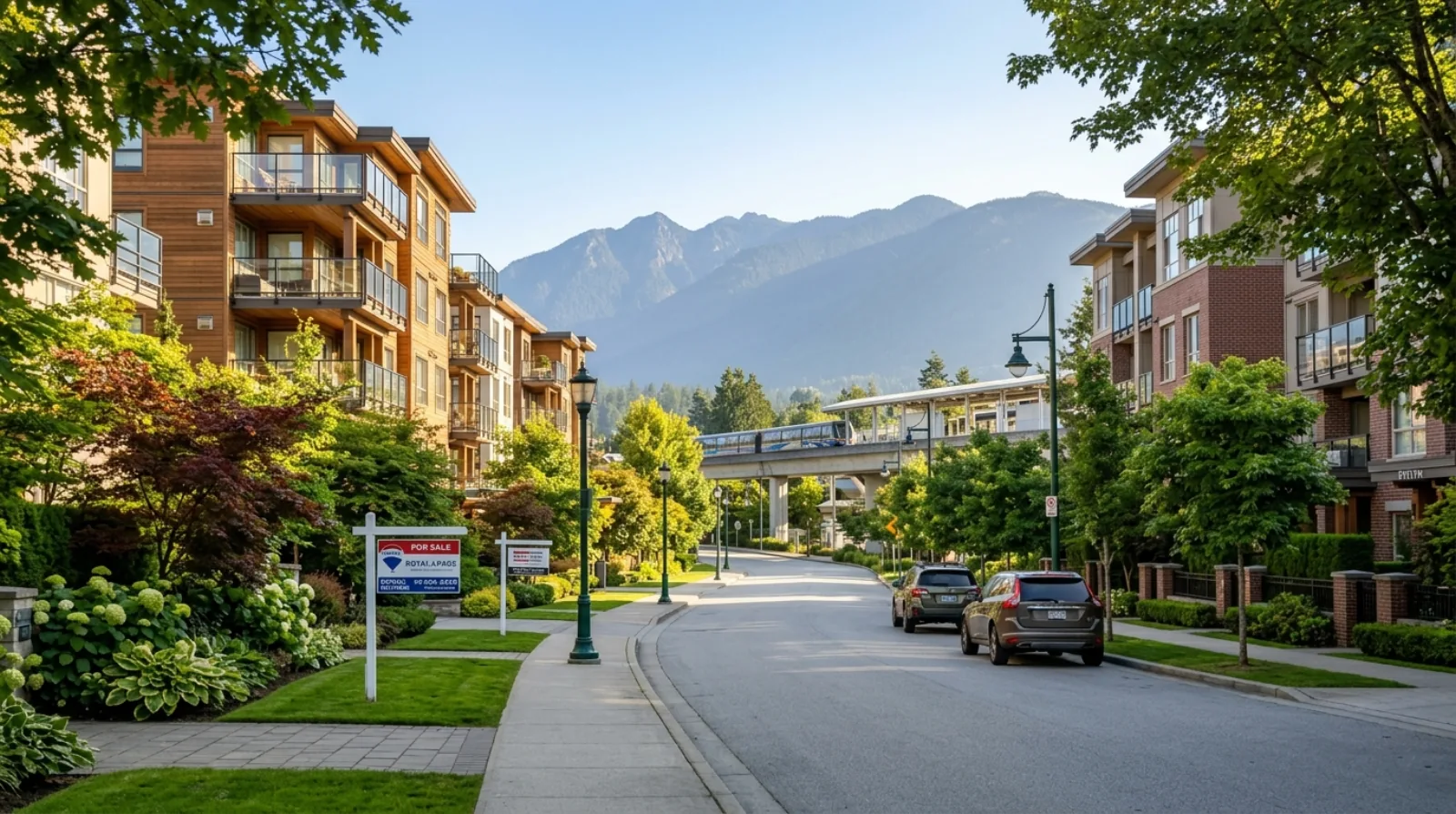
Near the transit-oriented cores, the six-unit allowance combines with land that was already appreciating, so the redevelopment signal is strongest there. I wrote more about that dynamic in how Brentwood went from neighbourhood to district, where the blocks around the towers are being repriced fastest. In a quieter, larger-lot pocket like Deer Lake, the zoning changed on paper but the buyer pool did not suddenly fill with builders, because those owners are not selling and the lots are held for lifestyle, not yield.
So "what is my lot worth now" has no city-wide answer. It depends on where you sit relative to transit, what your block already looks like, and who is actually shopping for property like yours.
What I tell owners to do first
Before you decide whether to market your home as a house or as a development site, get a feasibility read. The five steps below cost little but can change your pricing and negotiation strategy meaningfully. I walk Burnaby owners through them before any listing conversation.
- Confirm your zoning tier — does your lot qualify for three, four, or six units under the current R1 SSMUH rules? This is step zero. City of Burnaby's zoning map answers it free.
- Check the physical constraints — frontage, depth, grade, lane access, and protected trees. These determine whether the permitted density actually fits on the site.
- Pull recent comparable land sales — what have similar lots traded for in your pocket in the last 12 months? Builder-bought sites will tell you what a developer premium looks like locally.
- Apply the current massing limits — Burnaby's October 2025 amendments capped front buildings at 3 storeys and rear buildings at 2 storeys. Numbers based on the original 2024 rules may be overstated.
- Decide your buyer pool — target builders, end users, or both? Each audience values the same property differently, and the listing has to speak to the right one.
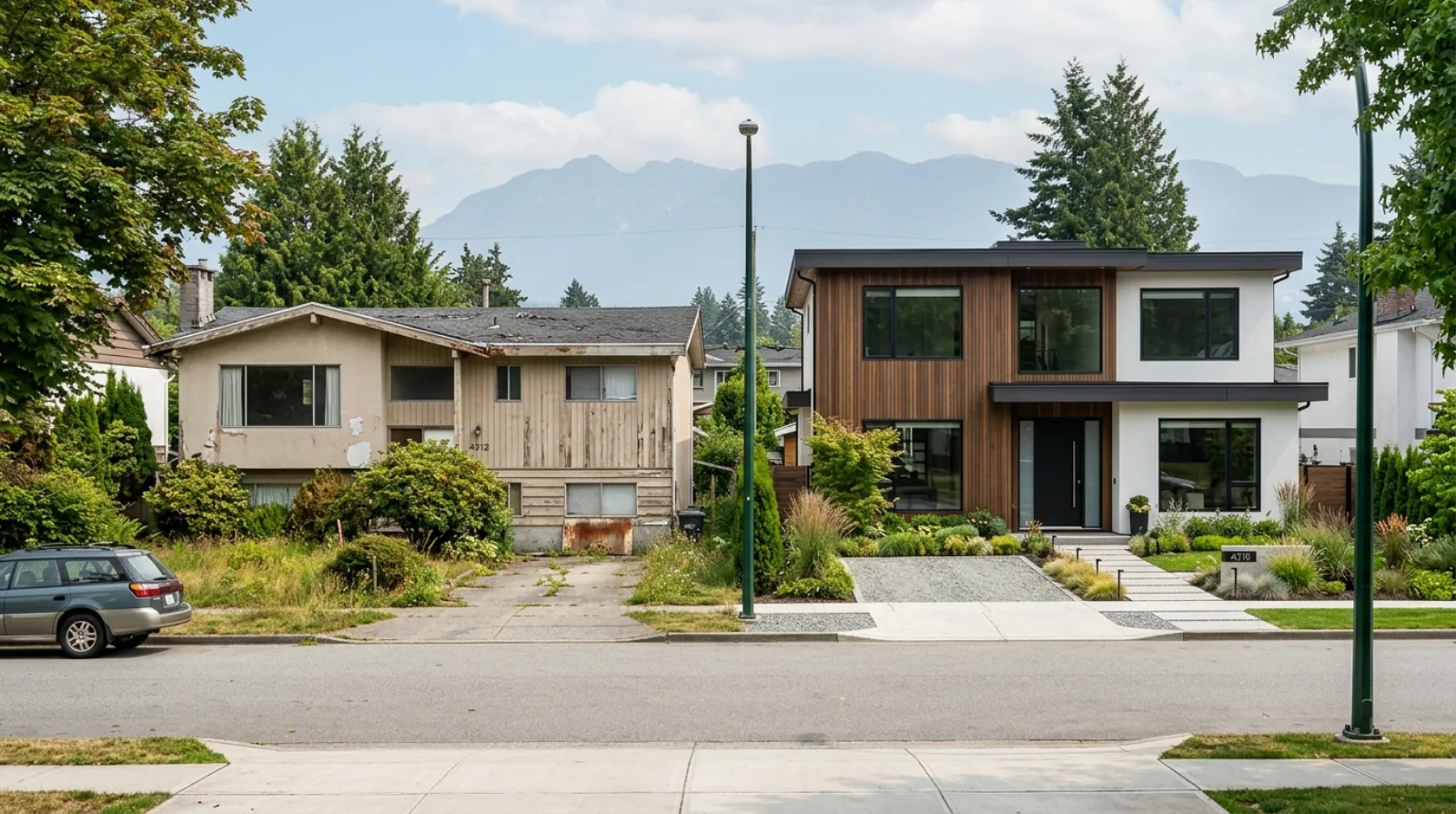
Two houses on the same street can have completely different outcomes under the same rule. The only way to know yours is to look at it directly.
How this fits the bigger Burnaby picture
It helps to zoom out. Bill 44 is part of a broader provincial push to add housing on land that already exists, rather than only at the edges of the region. For an owner, that means the long-run direction of travel favours more units on more lots, even as the specific massing rules get adjusted. Across Metro Vancouver, the detached benchmark sat near $1.84 million in spring 2026 according to Greater Vancouver REALTORS, so the land under a Burnaby house is already the expensive part. Rules that let that land hold more homes are, over time, a tailwind for lots that can actually use the density and a non-event for lots that cannot.
That is the honest framing. Bill 44 did not make every Burnaby lot equal. It made property-specific advice more useful than it has ever been.
Key Takeaways
- Bill 44 requires Burnaby to allow three to four units on most detached lots, and up to six on larger lots within 400 metres of frequent transit.
- Burnaby folded twelve old zones into one Small-Scale Residential (R1) district, effective July 1, 2024, then tightened height and massing limits in late 2025.
- The zoning permission does not guarantee a price premium. The site's physical and financial feasibility decides that.
- The strongest development lots have simple geometry, lane access, few site surprises, and nearby multiplex examples.
- Start with a feasibility read before choosing how to price or market the property, and use current rules, not 2024 assumptions.
Frequently Asked Questions
Can I build a multiplex on my Burnaby lot under Bill 44?
Most detached Burnaby lots now permit three to four units under the city's Small-Scale Residential (R1) zoning, and up to six on lots over 280 square metres within 400 metres of frequent transit. Whether a multiplex is buildable still depends on lot size, access, grade, and trees.
How many units can I actually build on a standard Burnaby lot?
It depends on lot size. Lots up to 280 square metres allow three units, lots larger than 280 square metres allow four, and qualifying lots near frequent transit allow six. A feasibility review confirms which tier applies to your specific property and what physically fits.
Did Bill 44 automatically raise my home's value?
Not automatically. The zoning change raises value only where the multiplex math works for a builder. Lots with poor access, steep slopes, or major tree constraints can still sell near traditional detached values because the redevelopment plan does not pencil out at current costs.
When did the Bill 44 changes take effect in Burnaby?
The province required qualifying municipalities to update zoning by June 30, 2024. Burnaby's Small-Scale Residential zoning took effect July 1, 2024, replacing its twelve older residential districts. The City later amended height and massing limits in late 2025 after community feedback.
What is SSMUH and how does it relate to Bill 44?
SSMUH stands for small-scale multi-unit housing, the category of three-to-six-unit homes Bill 44 legalized on former single-family and duplex lots. Burnaby's R1 district is the local zoning that implements SSMUH. People use "Bill 44," "SSMUH," and "R1" almost interchangeably in Burnaby.
Do I need to be near a SkyTrain station to get six units?
You need to be within 400 metres of frequent transit, which includes SkyTrain stations and frequent bus stops, and your lot must be at least 281 square metres. Outside that radius, the limit is three or four units depending on lot size, not six.
Does Bill 44 require off-street parking for a multiplex?
For lots within 400 metres of frequent transit, the province removed mandatory off-street parking minimums, leaving parking to the builder's discretion. Outside transit areas, local parking rules can still apply. Confirm the current requirement with the City of Burnaby for your specific address.
Can I keep renting out my existing house instead of building?
Yes. Bill 44 adds development options; it does not force anyone to build. Plenty of owners hold and rent while they weigh the math. The zoning simply means the redevelopment path now exists if and when you decide the numbers and timing make sense.
Will building a multiplex make sense financially in 2026?
Sometimes. It works best on simple, well-located lots where construction costs, financing, and resale prices leave a margin for the risk. On constrained lots, the numbers often do not close. Run a project-specific feasibility before committing, because current massing limits and rates both affect the answer.
How do I find out what my specific Burnaby lot can do?
Start with a feasibility read: confirm zoning tier, check frontage, grade, lane access, and trees, then pull nearby land and multiplex sales. I do this for Burnaby owners before listing so the pricing and marketing strategy match what the lot can realistically support.
⟳ July 2026 update: the new Zoning Bylaw is now in effect
Updated July 13, 2026. Burnaby's full Zoning Bylaw Rewrite is now complete. City Council adopted the new Zoning Bylaw 2026 and new Development Permit Area Guidelines on June 9, 2026, and the bylaw took effect on July 1, 2026, replacing the 1965 bylaw that had governed the city for six decades.
What stayed the same: The R1 SSMUH unit counts are unchanged — three units on lots up to 280 m², four on lots larger than 280 m², and up to six on qualifying lots within 400 metres of frequent transit. The provincial housing floor Bill 44 set remains intact.
What changed: The new bylaw replaces the old Floor Area Ratio (FAR) measurement system with simpler storey-height limits and introduces a new Development Permit system. For most owners this means the calculation of how much floor area actually fits on a lot now uses a different framework. Feasibility numbers based on FAR from the 2024–2025 rules need to be re-run against the current storey-height and lot-coverage rules.
If you are assessing development potential on a Burnaby lot right now, use the July 2026 rules — not anything published before June 2026. For the current tier thresholds, massing limits, and worked examples, the SSMUH zoning guide is where I keep the working version.
Sources
- Government of BC - Small-Scale Multi-Unit Housing (Bill 44)
- City of Burnaby - Zoning Bylaw changes permitting small-scale multi-unit housing now in effect (July 2024)
- City of Burnaby - Council cuts height and size of Province-mandated developments (Oct 2025)
- City of Burnaby - Zoning Bylaw Rewrite project page
- City of Burnaby - Zoning Bylaw 2026 (adopted June 9, 2026, effective July 1, 2026)
- Greater Vancouver REALTORS - Monthly Market Report
Post updated July 13, 2026 to reflect adoption of Burnaby Zoning Bylaw 2026 (effective July 1, 2026). Policy details are general information — verify current rules with the City of Burnaby before making development decisions.
Work With Jersey Li
Bill 44 made property-specific advice more useful, not less. Two lots on the same street can have completely different outcomes under the new rules, and the only way to know yours is to look at it directly. I help Burnaby owners figure out whether their lot is a house, a builder site, or both before it ever hits the market.
Call or text Jersey Li at 604.942.7211, get in touch, or request a Burnaby home valuation to talk through your lot. For the full walkthrough — zoning tiers, feasibility, financing, and the four paths — see the Burnaby multiplex development guide.

Sutton Group — 1st West Realty · Medallion Club Member (Top 10%)
Burnaby real estate advisor and multiplex strategist. Licensed REALTOR® with Sutton Group — 1st West Realty, specializing in residential, multiplex, and redevelopment transactions across Burnaby and Metro Vancouver.