Strata wind-ups and redevelopment: the 80% vote
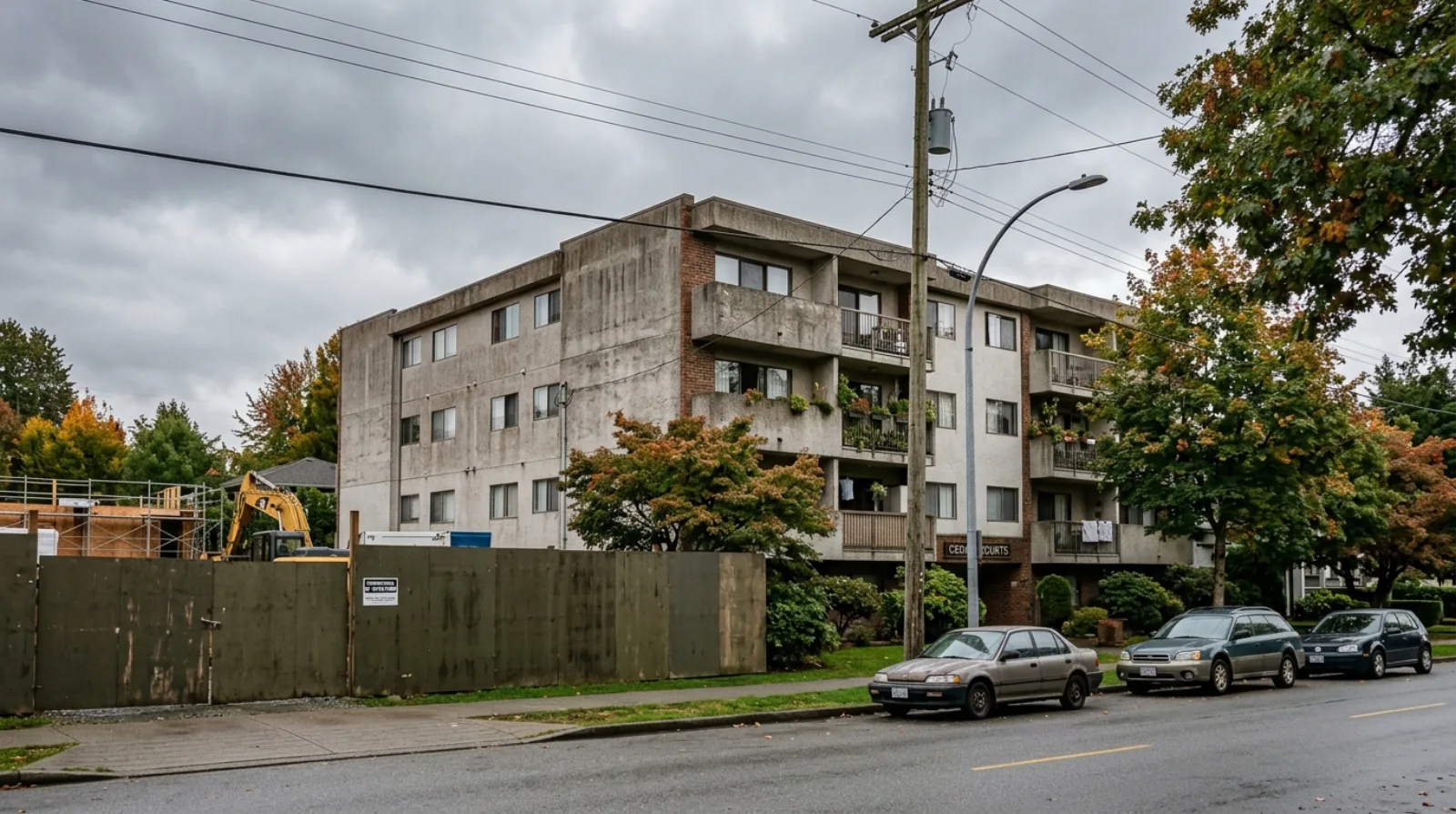
For most of the Strata Property Act's history, winding up a strata took a unanimous vote, which meant one owner could stop it. That changed on July 28, 2016, when amendments lowered the threshold to 80%. Since then, older buildings across Metro Vancouver have had a realistic path from "aging low-rise with a large repair bill" to "development site", and Burnaby has more of those buildings near transit than almost anywhere in the region.
If you own in an older Burnaby building, or you are thinking of buying into one, this is the process that could eventually decide what happens to your home. Here is how it actually runs.
How a Wind-Up Works
A developer or the owners raise the idea
Usually it starts either with an unsolicited approach to the council, or with owners facing a repair bill large enough that rebuilding starts to look rational. In Burnaby, transit-oriented area density under Bill 47 has made more of these approaches viable near stations.
Owners vote by majority to list the whole development
A strata may decide by majority vote at a general meeting to engage a brokerage to list the entire property, provided the listing contract is subject to the owners later passing the 80% wind-up vote and, where required, court confirmation.
The 80% wind-up vote
The resolution needs 80% approval of all registered owners. This is not a vote of those present at the meeting: absent owners count as no votes, which is why turnout campaigns matter. For stratas with fewer than five lots, the 80% requirement is effectively unanimous.
BC Supreme Court confirmation
Strata corporations with five or more lots must apply to the BC Supreme Court to approve the winding up and cancellation of the strata plan. The court weighs the interests of owners who voted against it, which is the main protection minority owners have.
Sale, distribution, and cancellation
On completion the property sells as a whole, proceeds are distributed among owners, and the strata plan is cancelled. Timelines from first approach to funds in hand commonly run to years, not months.
The 80% is of all owners, not of those who show up
This is the detail people get wrong most often. Unlike a majority or 3/4 vote, the 80% wind-up threshold is measured against all registered owners. An owner who does not attend and does not send a proxy has, in practice, voted no. It is also why a strata with fewer than five lots effectively needs unanimity.
Why This Comes Up in Burnaby
Two pressures meet in the same buildings. Older low-rise and concrete stock reaches the stage where envelope, plumbing, and electrical work costs a meaningful fraction of unit value, and a special levy of that size is difficult for owners to accept. At the same time, the land can be worth considerably more than the building standing on it.
Provincial transit-oriented area rules sharpened that second pressure. Within 200 metres of a SkyTrain station, municipalities must permit at least 20 storeys; from 200 to 400 metres, 12 storeys; from 400 to 800 metres, 8 storeys. Burnaby has eleven stations, so a large amount of older strata stock now sits inside a ring where the permitted density is far greater than what is built today. The station-by-station picture is in the SkyTrain living guide.
If You Own in a Building Where This Is Being Discussed
Read the minutes carefully and go to the meetings. Wind-up conversations tend to surface in council minutes long before any formal resolution, usually as a note that a developer has made an approach. Because absent owners count against the 80%, attendance genuinely changes outcomes here in a way it does not for ordinary votes.
Get independent advice on value rather than relying on the number in the approach letter. What a developer offers for the whole building has to be tested against what the land could actually support and what your unit is worth on the open market today. If your building is instead facing a large repair, the comparison you are really making is between a levy and a sale, which is covered in what to do about a special levy.
If You Are Buying Into One
Redevelopment potential is a real feature of some older Burnaby buildings, and it can support pricing that the building's physical condition alone would not. It is also uncertain: processes stall, votes fail, and court confirmation is not automatic. I would not pay a premium purely for wind-up potential, and I would want to know exactly where any current discussion stands before writing.
The documents tell you more than the marketing does. Start with the Form B and the reserve fund, then read two years of minutes for any mention of an approach, a land appraisal, or a wind-up committee. Owners considering the equivalent decision on a detached lot face a related question, covered in sell, hold, or redevelop.