Every spring I get the same question from Burnaby owners: "Is now the time to list, or should I wait?" It's a fair question, and the honest answer disappoints people a little. Timing matters — but at the margin, and far less than the two things sellers actually control: price and preparation. A well-prepared, well-priced home sells in most months. A poorly prepared, overpriced one struggles even in a strong season. So before we talk about which month, let's be clear about how much the calendar is really worth.
What the Burnaby calendar actually does
There is a real seasonal pattern in Metro Vancouver, and Burnaby tracks it. Activity wakes up in late winter, peaks through spring, settles over summer, gets a second wind in early fall, and goes quiet into the holidays. The annual cycle usually favours sellers in the first half of the year and tilts toward buyers in late summer and autumn, as Mortgage Sandbox frames it. More buyers are looking in spring, more listings come online, and the market simply has more energy.
So spring (March through May) is the busiest window, and early fall (September through November) is the reliable second. Those are the stretches with the most buyer eyes on the market. If everything else were equal, listing into that traffic helps.
But everything else is rarely equal — and 2026 is a good example of why.
Why 2026 breaks the simple "list in spring" rule
This spring did not behave like the textbook. As of April 2026, Greater Vancouver REALTORS reported a region-wide sales-to-active-listings ratio of 13.5% — technically a touch above the ten-year seasonal average, but with the detached segment down near 11.3%, which is soft enough to put downward pressure on prices. Inventory is high, buyers are patient, and the lift in activity has been selective rather than broad. Well-priced homes are getting attention; the rest are sitting.
And sitting can mean sitting. Earlier in 2026, Metro Vancouver homes were taking around 100 days on average to sell as listings surged and sales slowed, per Daily Hive's read of the January numbers. That's the backdrop: a balanced-to-buyer market where the "busy season" doesn't rescue a listing that's priced or presented wrong. My read is that in a market like this, how you list matters more than when — the spring traffic only rewards the homes that are actually ready for it.
The benchmark backdrop
Pricing context for any timing decision, from the April 2026 GVR report:
| Property type | Benchmark | Year-over-year |
|---|---|---|
| Detached | $1,840,700 | −8.3% |
| Townhouse | $1,043,400 | −5.1% |
| Apartment | $703,000 | −7.9% |
Source: Greater Vancouver REALTORS, April 2026 (MLS® HPI). Region-wide figures; Burnaby pockets and property types vary.
Prices softer year-over-year, inventory up, buyers in no hurry. That's not a "wait for the perfect month" market. It's a "be the best-prepared listing in your price band" market.
The timing that actually matters
Here's where I'd put your attention instead of the calendar.
Coordinate the sale with your next move. The most expensive timing mistake I see isn't listing in the wrong month — it's getting caught in a closing-date mismatch. If you're also buying, we sequence the two transactions so you're not stuck owning two homes or none. That coordination is worth far more than guessing the optimal week. For the buy side, the first-time and move-up buyer math is its own exercise.
Give yourself runway to prepare. A home that shows well in its first two weeks — when listing traffic peaks — does far better than one rushed onto the market raw. If getting genuinely ready takes three weeks, listing three weeks later into a prepared launch beats listing now into a half-ready one. Don't sacrifice the prep to hit an arbitrary date.
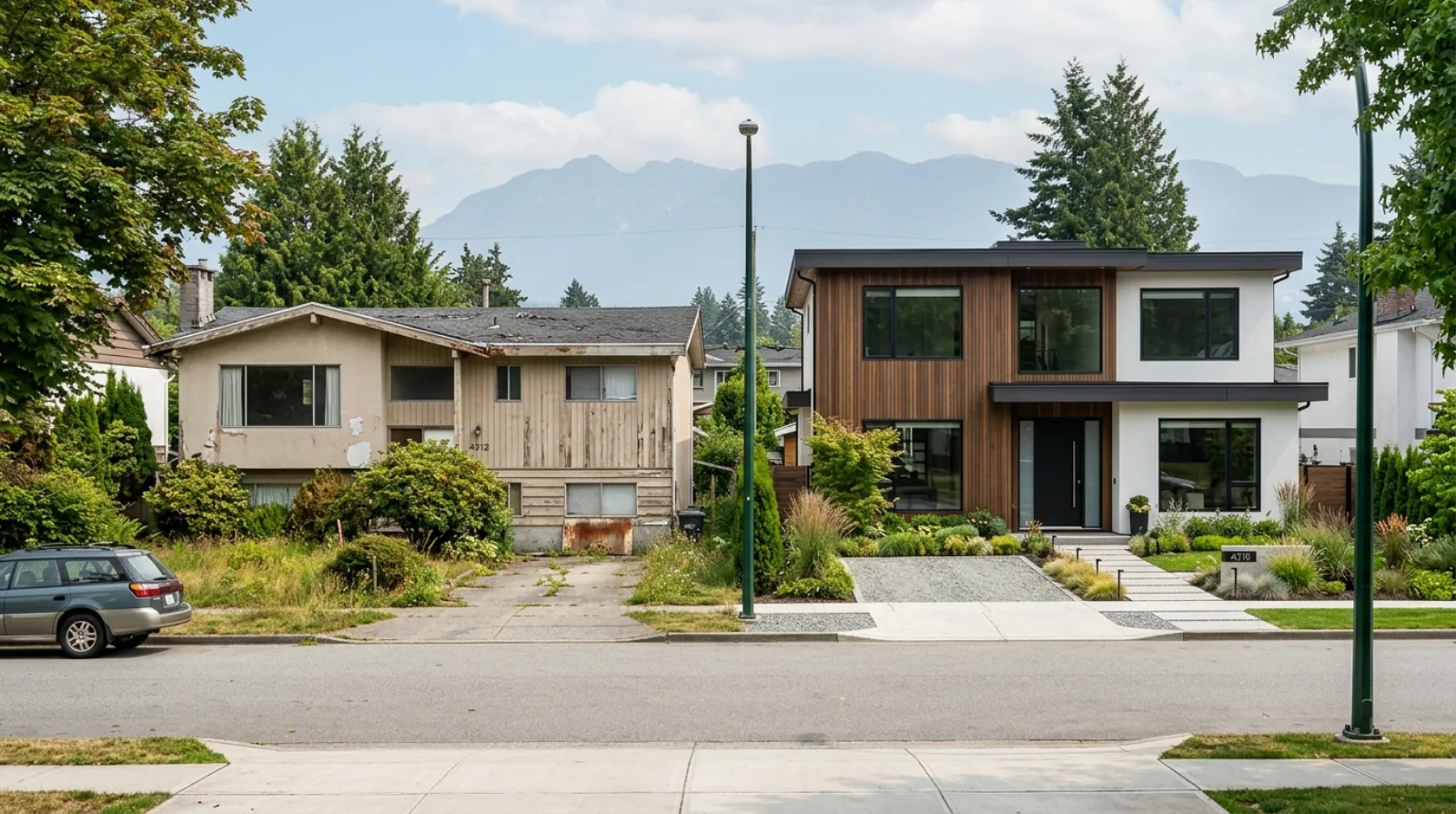
Price to the right buyer first. This is the Burnaby-specific one. Under Bill 44 and the R1 SSMUH rules, many detached lots now have two values — an end-user value and a builder value. A builder doesn't care what season it is; development-grade lots can attract interest year-round, independent of the buyer cycle. If your lot might be a development site, the sell, hold, build, or co-develop decision matters more than the month on the calendar.
Burnaby seasonal selling calendar: what each window actually delivers
If you want a practical breakdown of the four selling windows, here is how each plays out in practice for Burnaby:
| Window | Months | Buyer activity | What it favours | What it doesn't |
|---|---|---|---|---|
| Spring | Mar – May | Highest | Well-presented homes at any price point | Overpriced listings — buyers have most to compare against |
| Early summer | Jun | Moderate | Motivated buyers finishing their search before summer travel | Vacant lots and development land (builder pacing independent of this) |
| Late summer | Jul – Aug | Lowest | Tenant-occupied rentals (tenants in situ, showing is harder to schedule) | Family homes — buyers with school-age kids want to close by mid-summer |
| Fall | Sep – Nov | Second highest | Homes that didn't move in spring; refreshed listings with updated pricing | Properties with heavy outdoor living (gardens, patios lose impact in rain) |
| Winter | Dec – Feb | Lowest | Motivated, serious buyers only — fewer tire-kickers; developer/lot buyers still active | Everything else |
For detached homes in Burnaby in 2026, the spring window (March–May) and the fall window (September–November) are still the two highest-traffic periods. But the lift those windows provide is more selective than in prior years. High inventory means buyers have options in every season; a spring listing that sits into June and re-lists in October will not be viewed as "fresh" by the market, which scouts listing history.
What good preparation actually looks like
This is the version I give owners before they list, not the generic checklist version.
Three weeks before: Any deferred maintenance that shows in an inspection gets done first. Leaky faucets, jammed doors, nail pops in the ceiling, evidence of past moisture — these are the items inspectors flag and buyers use to renegotiate. Fix them quietly before the listing and they become a non-issue. Wait and they become a negotiating chip in someone else's hands.
Two weeks before: Declutter and depersonalise more aggressively than feels natural. Buyers need to visualise their own life in the home. Rental storage units are cheap; clearing a third of the furniture out of an average Burnaby home is almost always worth it. Clean everything, including the parts that aren't visible at first glance — attic hatch, furnace room, under-sink cabinetry. Buyers open everything.
One week before: Professional photography when the home is fully prepared, not before. Photos taken in a cluttered or half-staged home are permanent. Once a home is on MLS, those images are the first impression for every buyer in the market. Poor photos in week one are impossible to fully recover from, even with a reshoot.
Launch day: The first two weeks carry the highest listing traffic. Price it right from day one — not "testing" a high number and reducing later. In a market with 36-day median days on market, a price drop in week three signals weakness to buyers and erodes negotiating leverage. A well-priced listing that attracts early interest is in a structurally stronger position than one that lingers.
So — is now a good time to sell in Burnaby?
My honest answer: the calendar is a minor factor, and 2026's market is one where preparation and pricing do almost all the work. If you need to move, you move — and you win by being the cleanest, best-priced listing in your band, in whatever month you list. If you're purely speculating on getting a better season, you're optimizing the wrong variable. I'd rather help you nail the price and the prep than wait three months for a "spring" that, this year, isn't doing the lifting people expect.
If you want the full sequence — pricing, costs, prep, and timing in order — the complete guide to selling a Burnaby home walks through it step by step.
Key Takeaways
- Spring (Mar–May) is the busiest selling window — the annual cycle usually favours sellers in the first half of the year; early fall is second.
- In the balanced-to-buyer market of 2026 (13.5% sales-to-active in April, prices down YoY), the "busy season" doesn't rescue an overpriced or under-prepared home.
- The timing that actually moves your outcome: coordinating with your next move, leaving runway to prepare, and pricing to the right buyer.
- Development-grade Burnaby lots under Bill 44 can attract builders year-round, independent of the seasonal buyer cycle.
Frequently Asked Questions
When is the best time to sell a house in Burnaby?
Spring (March–May) historically sees the most buyer activity and the strongest sale prices in Metro Vancouver, with early fall (September–November) the second strongest window. That said, in a balanced market like 2026, pricing and preparation matter more than the month — a well-prepared, well-priced home sells in most seasons.
How long does it take to sell a home in Burnaby in 2026?
In a balanced market, expect roughly 30 to 45 days from listing to accepted offer for a well-priced home. In slower conditions it can stretch much longer — Metro Vancouver averaged around 100 days earlier in 2026 as inventory rose. Preparation and pricing strategy are the biggest levers on how fast you sell.
Should I wait until spring to list my Burnaby home?
Only if waiting doesn't cost you more than it gains. Spring brings more buyers, but 2026's spring market has been selective and prices are softer year-over-year. If you need to move or your home is ready now, listing into a well-prepared launch usually beats waiting for a season that may not deliver the lift you expect.
Does the season matter if I'm selling to a builder?
Less than you'd think. If your lot's value is in its redevelopment potential under Bill 44, a builder is pricing the land and zoning, not responding to seasonal buyer demand. Development-grade lots can draw interest year-round, so the sell/hold/build decision matters more than the calendar.
Is 2026 a buyer's or seller's market in Burnaby?
Balanced, leaning toward buyers. The April 2026 region-wide sales-to-active ratio was 13.5%, with detached near 11.3% — soft enough to put downward pressure on prices. Inventory is high and buyers are patient, which rewards sellers who prepare and price honestly.
Sources
- Greater Vancouver REALTORS — Monthly Market Report (April 2026 benchmarks and sales-to-active ratio)
- Mortgage Sandbox — Vancouver Real Estate Forecast (seasonal sales pattern, April vs January)
- Daily Hive — Metro Vancouver homes taking ~100 days to sell (January 2026)
- Province of BC — Small-Scale Multi-Unit Housing (Bill 44)
---
Trying to decide whether to list now or wait? I'll give you a straight read on your specific home — what it's worth to both kinds of buyer, what it needs before it goes live, and the timing that fits your next move. Get a no-obligation valuation or reach out directly. — Jersey Li, PREC, Sutton Group — 1st West Realty

Sutton Group — 1st West Realty · Medallion Club Member (Top 10%)
Burnaby real estate advisor and multiplex strategist. Licensed REALTOR® with Sutton Group — 1st West Realty, specializing in residential, multiplex, and redevelopment transactions across Burnaby and Metro Vancouver.