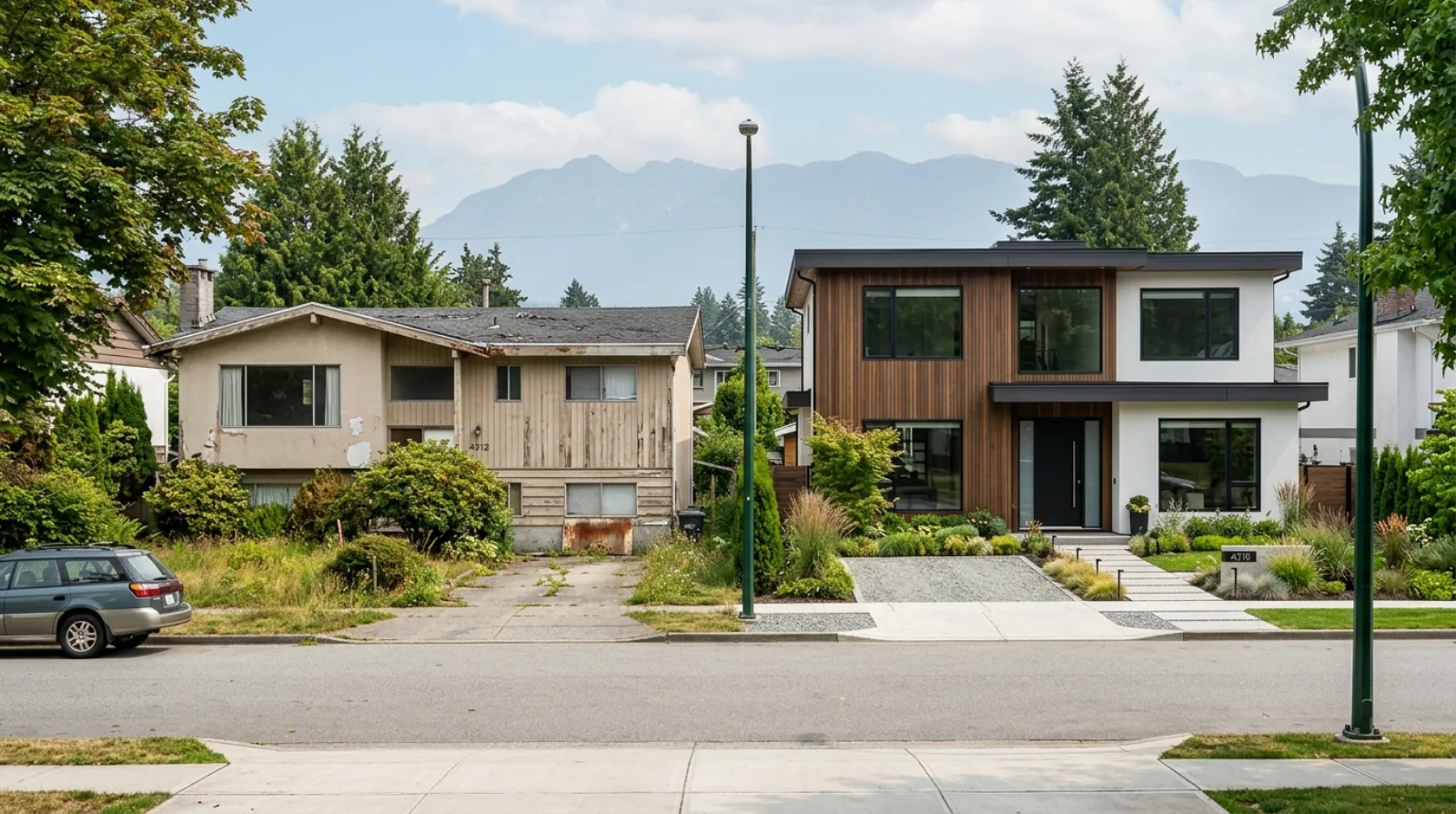
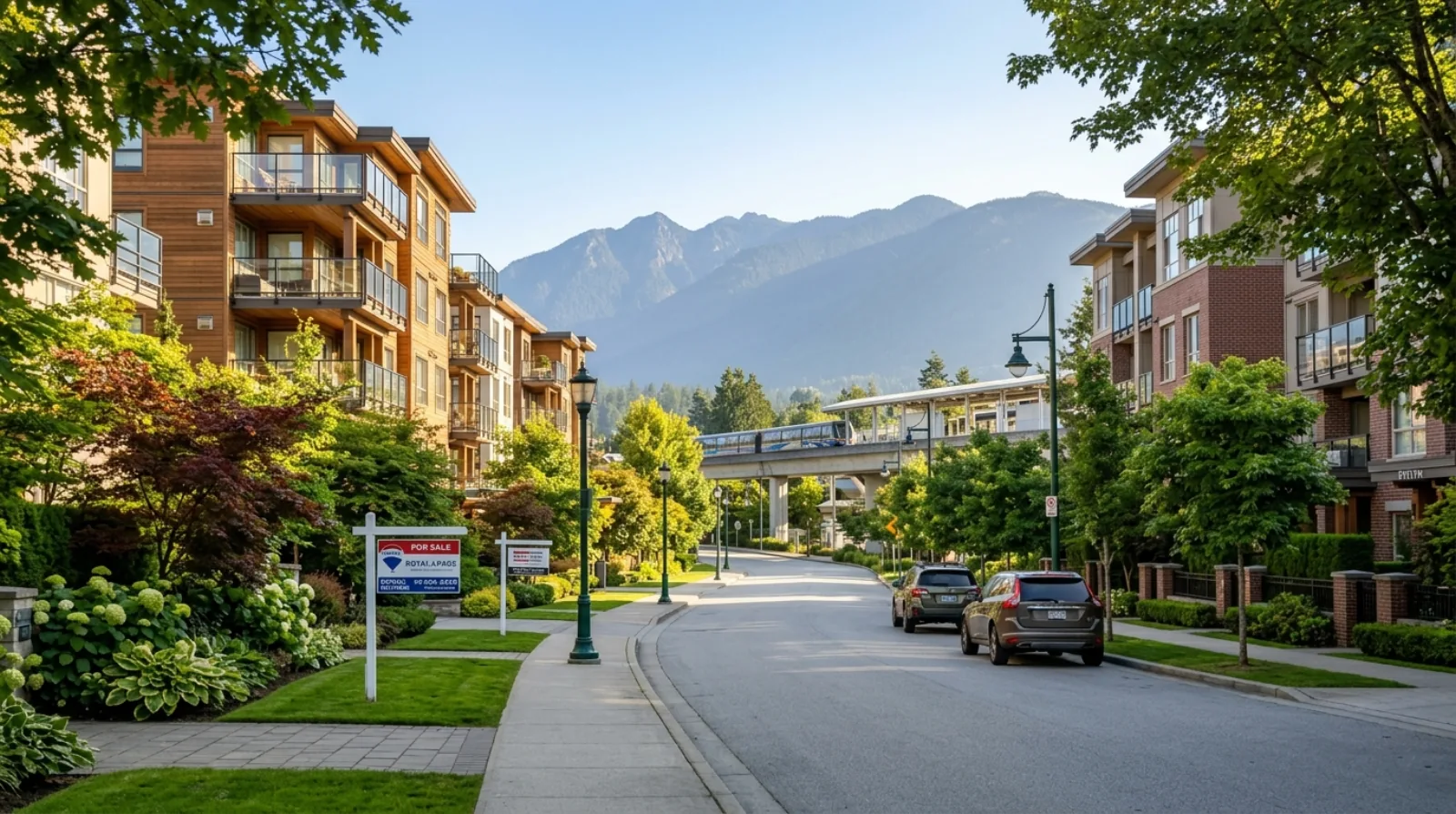
Almost every owner I talk to about a multiplex starts in the same place: units. How many can I build, how big, what will they sell for. That is the fun part. The financing is the part that quietly decides whether any of it happens, and it is where I spend a surprising amount of a first conversation. If you are weighing a build on your Burnaby lot, this is the piece worth understanding before you fall in love with a number.
For the zoning side of this — how many units your lot is actually allowed — start with the R1 SSMUH rules guide. This post assumes you already know your tier and want to understand how the money works.
A multiplex is financed like a project, not a house
When you buy a house, the lender looks at you: income, credit, down payment. A multiplex build is different. The lender is underwriting a project — land, a construction budget, a timeline, and a forecast of what the finished units are worth. Construction financing draws down in stages as the build hits milestones, and you carry interest on the drawn balance through the whole 18-to-24-month build, on top of property tax and insurance. That carry is real money, and it compounds. It is one of the cost drivers that separates a lot that pencils from one that does not.
The practical consequence: you need either meaningful equity in the land, outside capital, or a co-development partner who brings the construction financing. An owner sitting on a paid-off Burnaby lot is in a far stronger position than one still carrying a large mortgage, because the land equity is the foundation the rest of the financing sits on.
The five-unit line that reshapes the deal
Here is the detail that almost no headline covers, and the one I make sure every owner near transit understands.
CMHC's MLI Select is the federal multi-unit mortgage loan insurance program. For a rental hold, it is genuinely powerful: it can unlock reduced insurance premiums and dramatically longer amortization — up to 50 years at the highest point thresholds — based on how a project scores for affordability, energy efficiency, and accessibility. Longer amortization means lower payments, which means a building that cash-flows where it otherwise would not.
But MLI Select has a hard floor: a minimum of five units. A three- or four-unit multiplex does not qualify, full stop. Below five units, you are financing the project conventionally and, if you hold it, carrying it on standard residential or small commercial terms.
That single line changes the math on the six-unit tier. Most owners think of the jump from four units to six as "two more homes to sell." It can be much more than that. If your lot clears the 400-metre frequent-transit threshold and you build five or six units as a rental hold, you cross into MLI Select territory — and the financing structure of the whole project can change, not just its top-line revenue. I have seen lots where the difference between four units and five was the difference between a deal that cash-flowed and one that did not.
Build to sell vs. build to hold
The financing depends heavily on your exit.
Build to sell — you finance the construction, sell the finished units (often as strata lots), repay the construction loan, and keep the margin. This is the developer model. It is capital-intensive and front-loaded with risk, but it realises value fastest. MLI Select is mostly irrelevant here because you are not holding the building.
Build to hold — you finance the construction, then refinance into a long-term mortgage on the completed rental building and keep it for income. This is where MLI Select earns its keep, and where the five-unit minimum suddenly matters a great deal. It suits owners who want long-run income and are not in a hurry for the capital.
Co-develop — you contribute the land, a builder partner contributes capital and construction expertise, and you split the result. This can sidestep the financing problem entirely for an owner who is land-rich but cash-constrained, at the cost of sharing the upside. The structure of the agreement — profit split, design control, exit timing — is everything.
I model all of these on the multiplex advisory page, because the right financing path is downstream of which exit suits your life, not the other way around.
Why I won't quote you a per-unit number
Owners often want a single figure: what does it cost, what will it make. I deliberately do not put per-square-foot construction numbers in a guide like this, and I am wary of anyone who does. The cost of your project depends on your lot — the soil, the slope, the unit mix, the finish, the soft costs, and the rate environment when you draw your construction financing. A peat lot that needs piles to refusal is a different project from its neighbour on firm till. A generic average would mislead more than it helps.
What I can do is build the real number for your specific site, working from current builder estimates in my network rather than published averages, and run it against likely resale or rental income. That is the feasibility read, and it is the only number worth underwriting against.
What lenders actually look at
When I help owners prepare for conversations with construction lenders, they are often surprised by what matters and what does not.
Lenders want to see a realistic cost stack — not a number you found online, but current builder estimates for your specific lot. A peat lot that needs deep piles and grade work is a different project cost than the house next door on firm till. Lenders know this and will ask. Come with actual numbers.
They also want to see your exit plan. Whether you are selling units, holding as rental, or some hybrid, the lender is underwriting against a specific outcome. Changing the exit plan mid-build is possible but creates friction and sometimes cost. Being clear about the exit from the start is not just good planning — it affects the loan structure.
The loan-to-cost and loan-to-value ratios are the two numbers that will define how much of your own capital has to go in. A standard construction lender might advance 65–75% of project cost, depending on their assessment of the project and your track record. First-time developers typically face tighter ratios than experienced builders, which means more equity required to close the gap.
And if you have an existing mortgage on the land, that mortgage either gets discharged or subordinated before construction financing is layered on top. A large outstanding balance significantly reduces what a lender will advance against the land value.
The soft cost category most owners underestimate
Hard costs — the actual construction — are what owners focus on. Soft costs are what trip them up.
A Burnaby multiplex project typically carries soft costs of 15–25% of hard costs, depending on complexity. These include:
- Architectural and engineering fees
- Permit fees, development cost charges, and school site acquisition charges
- Geotechnical studies (required on most sites)
- Surveying and legal for subdivision if creating strata lots
- Financing costs: interest carry through the construction period, lender fees, and insurance premiums
- Contingency — typically 10–15% of hard costs
The contingency is the most important line and the one owners most want to reduce. Resist that instinct. Construction projects in Burnaby routinely surface surprises — old buried oil tanks, unexpected soil conditions, services that need upgrading. A well-funded contingency is not pessimism; it is the thing that keeps a good project from becoming a stressful one.
Key Takeaways
- A multiplex is financed as a project: construction financing draws in stages, and you carry interest plus taxes and insurance through an 18–24 month build.
- Land equity is the foundation of the financing — a paid-off or low-mortgage Burnaby lot is a much stronger starting point.
- CMHC's MLI Select can unlock reduced premiums and up to 50-year amortization for a rental hold, but requires a minimum of five units.
- The jump to five or six units near transit can change the project's financing structure, not just its revenue — that is why the six-unit tier matters beyond unit count.
- Your financing path follows your exit: build to sell, build to hold, or co-develop. Model the exit first.
- Soft costs typically run 15–25% of hard costs; the contingency line is the most important and the most commonly underestimated.
Frequently Asked Questions
Can I get a regular mortgage to build a multiplex in Burnaby?
Not in the usual sense. A multiplex build is financed with construction financing that draws in stages against the budget and timeline, then is repaid by selling the units or refinanced into a long-term mortgage if you hold the building. A standard purchase mortgage does not cover ground-up construction.
What is CMHC MLI Select and do I qualify?
MLI Select is CMHC's multi-unit mortgage loan insurance that can unlock reduced premiums and longer amortization — up to 50 years — based on affordability, energy efficiency, and accessibility points. It requires a minimum of five units, so a three- or four-unit multiplex does not qualify. It is most relevant if you plan to hold the building as a rental.
Does building six units instead of four really change the financing?
It can. Crossing five units on a lot that qualifies near frequent transit opens MLI Select, which can materially change amortization and therefore cash flow on a rental hold. So the six-unit tier is not just two extra homes to sell — it can change the financing structure of the whole project.
How much does it cost to build a multiplex in Burnaby?
It depends entirely on your lot and build — soil, slope, unit mix, finish level, soft costs, and the rate environment. Rather than a misleading average, I build the actual cost stack for your specific site from current builder estimates and run it against likely resale or income before you commit.
Should I build to sell or build to hold?
Build to sell realises value fastest but is capital-intensive and front-loaded with risk. Build to hold suits owners who want long-run income and can benefit from MLI Select at five-plus units. Co-development lets a land-rich, cash-constrained owner partner with a builder. The right answer follows your capital position and timeline.
Sources
- CMHC - MLI Select multi-unit mortgage loan insurance
- CMHC - Mortgage Loan Insurance for Multi-Unit and Rental Housing
- Government of BC - Small-Scale Multi-Unit Housing (Bill 44)
Financing details and program rules current as of June 2026 and subject to change. This is general information, not financial advice. Confirm current MLI Select terms and your eligibility with CMHC and a qualified mortgage professional before relying on any of the above.
Work With Jersey Li
The units are the easy part to imagine. The financing is what decides whether the build is a smart move or an expensive mistake — and for owners near transit, the five-unit line can tip the whole decision. I help Burnaby owners model the real numbers, including the financing path, before they choose to sell, hold, build, or co-develop.
Call or text Jersey Li at 604.942.7211, get in touch, or work through the full multiplex development guide first.

Sutton Group — 1st West Realty · Medallion Club Member (Top 10%)
Burnaby real estate advisor and multiplex strategist. Licensed REALTOR® with Sutton Group — 1st West Realty, specializing in residential, multiplex, and redevelopment transactions across Burnaby and Metro Vancouver.